
The quick version:
The real pain in AI video is bouncing between a generation tool and a separate editor, importing and reimporting clips dozens of times.
Palmier Pro makes the timeline the single source of truth, so generation and editing live in one project.
It connects to Claude, Codex, and Cursor through a local MCP server, turning your agent into a timeline assistant.
The problem it targets
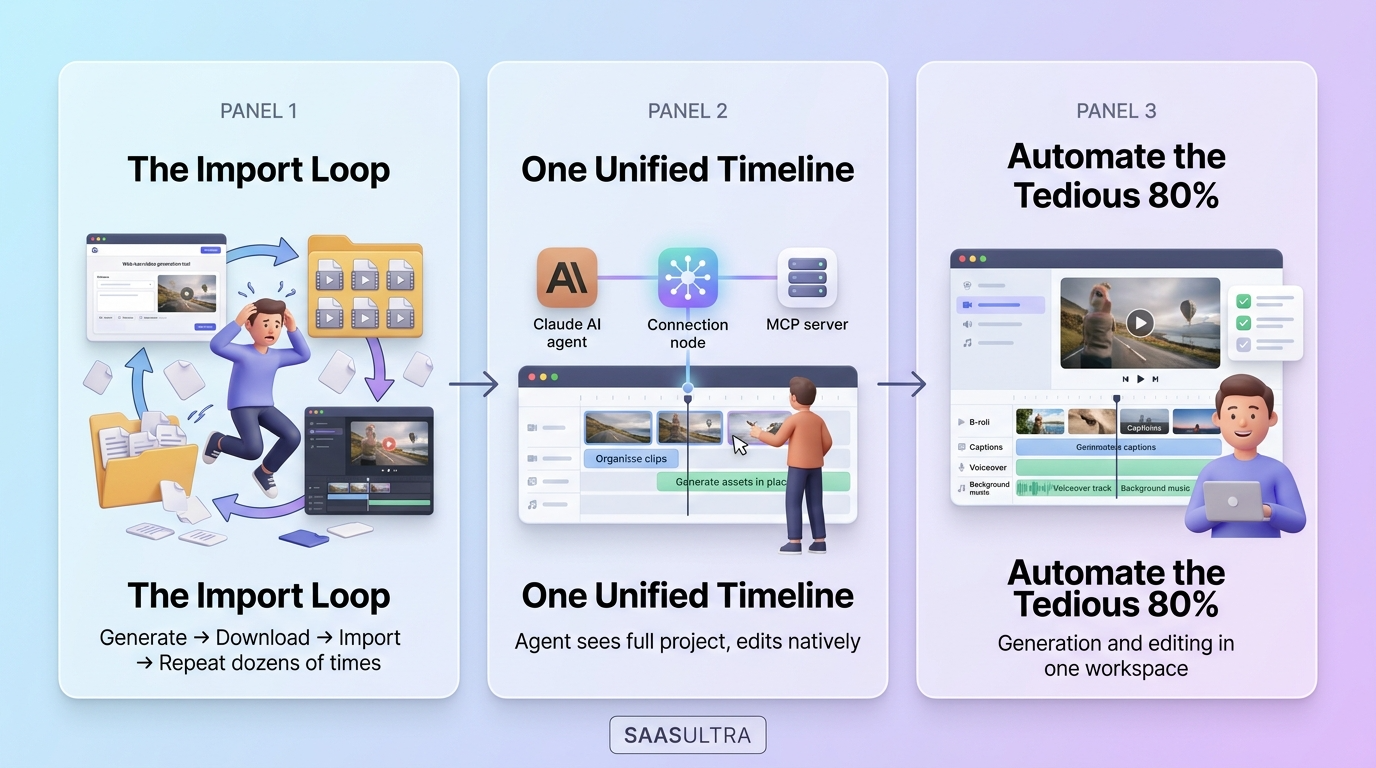
Anyone making AI video knows the loop. You generate a clip in a web tool, download it, import it into Premiere, find one bad section, go back, regenerate, reimport. Repeat that dozens of times and your folders fill with unnamed versions and your context is scattered across different apps. That grind is exactly what Palmier is built to kill.
The agent angle
Each project opens a local MCP server at a fixed address, and you point Claude Desktop, Claude Code, Cursor, or Codex at it. From there the agent can find key moments in long footage, draft a first cut, add captions, organise files, and generate b-roll, sound effects, voiceovers, and music straight onto the timeline. The grunt work that eats editing hours becomes promptable.
My read
The interesting bet here is treating the editor as a shared workspace for a human and an agent rather than a chat window that spits out a file. Practitioners on Reddit have wanted this for a while, a place where the AI sees the whole project, not one clip at a time. Whether agents can really hold creative judgement is the open question, but automating the tedious 80 percent of editing is a genuinely useful start.
Quick Links:
Comments
Be the first to leave a comment.