

Creator burnout is no longer a hidden problem in 2026. It has become one of the biggest challenges in the entire creator economy. Millions of people who make content for a living are feeling overwhelmed, tired, and ready to quit. What used to be an exciting way to earn money has turned into a stressful, never-ending race for many. This detailed report looks at the latest statistics on creator burnout, how it affects earnings and mental health, and why it is happening. It also explores how new AI tools are starting to help creators work in a healthier way.
How Common Is Creator Burnout in 2026?
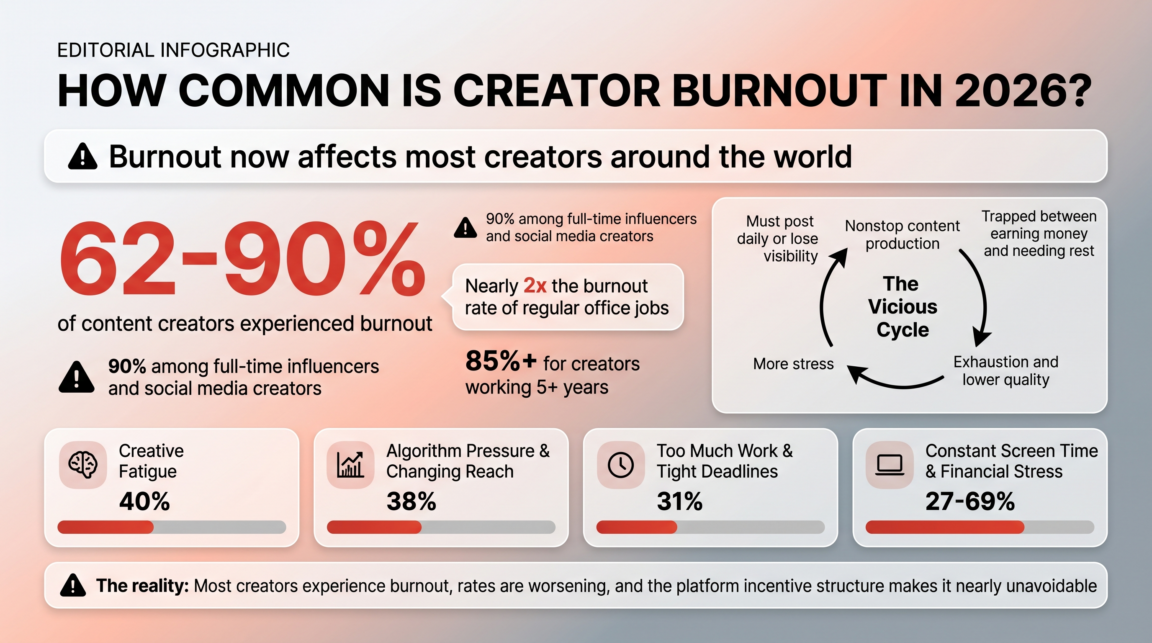
The numbers are very worrying. Burnout now affects most creators around the world.
Between 62% and 90% of content creators say they have experienced burnout.
Among full-time influencers and social media creators, the rate is as high as 90%.
This is almost twice the burnout rate seen in regular office jobs.
Creators who have been working for five years or more report even higher rates, often over 85%.
The main reasons creators give for burnout are clear:
Creative fatigue (40%)
Algorithm pressure and changing reach (38%)
Too much work and tight deadlines (31%)
Constant screen time and financial stress (27–69%)
These problems create a difficult cycle. Creators feel they must post every day or lose visibility. But producing content nonstop leads to exhaustion, lower quality work, and even more stress. Many say they feel trapped between the need to earn money and the need to rest.
The Mental Health Crisis Among Creators
Burnout is hurting creators’ mental health in serious ways. The statistics show a growing problem:
52% of creators report anxiety because of their work.
35% say they experience depression linked to content creation.
10% have had suicidal thoughts connected to work pressure — almost double the rate in the general population.
59% feel their career has been damaged by burnout.
58% say their self-worth drops when a post does not perform well.
Many creators feel they are always “on.” They must reply to comments, answer DMs, and stay active online even when they are tired. This emotional labor is rarely talked about, but it adds heavy stress. The pressure to look perfect and happy all the time makes the problem worse. Some creators have started speaking openly about taking breaks, but many still feel they cannot afford to slow down.
How Burnout Hurts Earnings and Productivity
Burnout is not just a personal issue — it directly reduces how much money creators make. Here are the real costs:
Productivity falls by 30% to 52% when creators are burned out.
Mid-tier creators (those earning around $50,000 to $100,000 a year) lose $15,000 to $25,000 in annual income because of burnout.
A full two-week burnout break can cost a top creator $20,000 to $50,000 in lost brand deals and opportunities.
Agencies that work with multiple creators can lose $100,000 or more in a single quarter when several creators burn out at the same time.
One big hidden cost is context-switching — jumping between different apps, platforms, and tasks. Creators waste up to 40% of their working time doing this. It lowers output, causes missed trends, and weakens audience connection. When creators are exhausted, they also produce safer, less creative content, which gets less engagement and fewer brand deals.
The Impact on Brands and Agencies
Burnout does not only affect creators. Brands and agencies that rely on them also suffer.
When a popular creator burns out, agencies can lose $20,000 to $50,000 from delayed or cancelled campaigns.
If several creators in one team burn out, the losses can reach $100,000+ in a single quarter.
Brands miss important launch windows and get lower quality content.
Audience trust drops when creators seem tired or inconsistent.
Many agencies now say creator burnout is one of their biggest supply chain risks. They are starting to look for better ways to support creators so they can deliver consistent work.
How AI Tools Like Digiexe Are Helping Fight Burnout
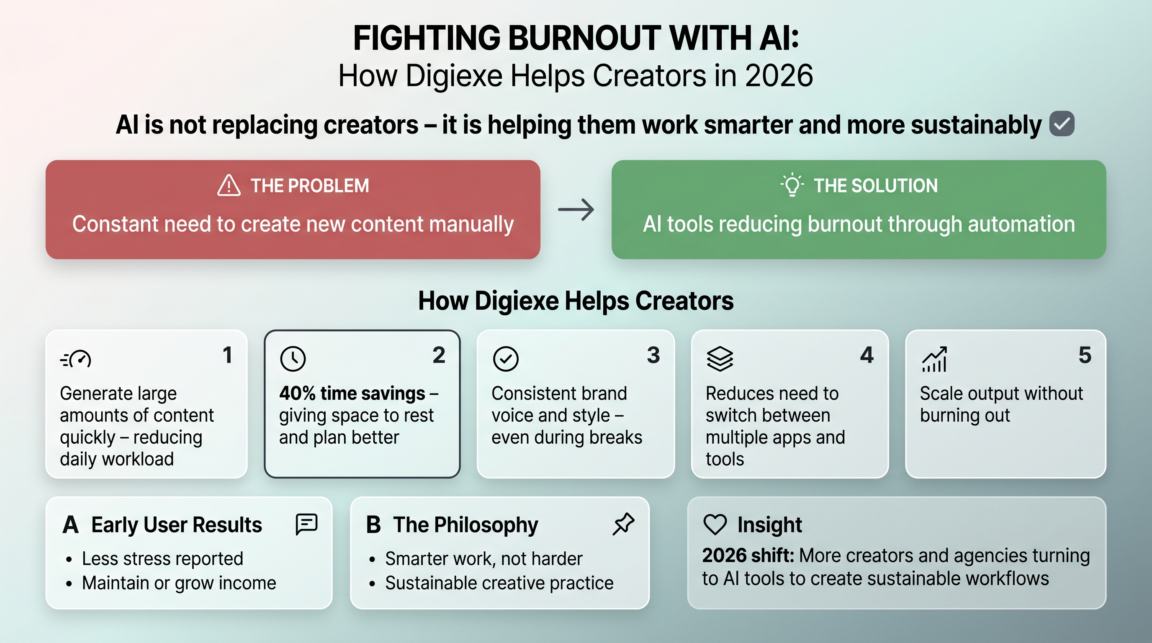
In 2026, more creators and agencies are turning to AI tools to reduce burnout. Platforms like Digiexe are becoming popular because they solve the main problem: the constant need to create new content manually.
How Digiexe Helps Creators:
It can generate large amounts of content quickly, reducing the daily workload.
Creators save up to 40% of their time, giving them space to rest and plan better.
The tool keeps a consistent brand voice and style, even when the creator needs a break.
It reduces the need to switch between many different apps and tools.
Creators can scale their output without burning out.
Many early users of Digiexe say they feel less stressed and can maintain or even grow their income. AI is not replacing creators — it is helping them work in a smarter and more sustainable way.
The Future of Creator Work
Creator burnout in 2026 is a clear warning. The old way of working — posting every day without support — is not working for most people. The creators and agencies that will succeed in the future are those who use better tools, build real communities, and protect their mental health.
The creator economy is still growing fast. But only those who adapt will do well. AI tools like Digiexe are becoming essential for long-term success. Creators who learn to use them wisely can focus on being authentic and creative instead of constantly grinding.
The statistics are serious, but they also show a path forward. By using smarter systems and taking care of their well-being, creators can build careers that last. The next few years will be challenging, but they also offer a real chance to create a healthier and more sustainable creator economy.
FAQs
Creator burnout in 2026 is largely driven by algorithm pressure, the demand for constant content output across multiple platforms, and the blurring of personal and professional life. Many creators feel trapped in a cycle of producing more content just to maintain visibility, leaving little room for rest or creativity.
Many creators are leaving because the mental and physical toll of maintaining a consistent online presence outweighs the financial and emotional rewards. The rise of AI-generated content has also intensified competition, making it harder for human creators to feel their work is valued or sustainable.
Creators can recover by setting clear boundaries around posting schedules, communicating openly with their audience about taking breaks, and repurposing older content to stay active while resting. Many creators who take intentional hiatuses find their audience remains loyal and even more engaged upon their return.
Yes, most industry surveys and creator reports suggest burnout rates are significantly higher in 2026 compared to previous years, fueled by faster content cycles and economic uncertainty. The pressure to monetize every piece of content has added a financial stress layer that previous generations of creators did not face as intensely.
Platforms can help by reducing algorithmic penalties for inconsistent posting, offering better mental health resources, and creating fairer monetization models that don't require creators to post daily to earn income. Without structural changes from platforms, individual coping strategies alone are unlikely to solve the broader burnout crisis.
Comments
Be the first to leave a comment.