
Oxylabs

- 175M+ global proxy IPs
- 195+ country coverage
- HTTP & HTTPS Support
- Residential, mobile, ISP & datacenter proxies
- AI-powered Web Unblocker
- Real-time data extraction
Decodo

- 125M+ ethically sourced IPs
- 195+ global proxy locations
- HTTP, HTTPS & SOCKS5 support
- Residential, mobile & datacenter proxies
- X Browser anti-detect tool
- Browser fingerprint protection
Webshare

- 80M+ proxy IP Network
- 195+ country coverage
- HTTP, HTTPS & SOCKS5 support
- Datacenter & residential proxies
- High-speed proxy servers
- Chrome proxy extension
E-commerce is one of the most data-hungry industries on the internet. Pricing decisions, inventory strategies, competitive positioning, and product listing optimization all depend on collecting accurate, real-time data from competitor stores, marketplaces, and supplier platforms.
Without the right proxy infrastructure, your e-commerce data pipeline hits rate limits, CAPTCHAs, and geo-blocks that make accurate, at-scale data collection impossible.
I’ve verified all pricing and features directly from each provider’s official website to give you the most current, accurate guide to e-commerce proxies in 2026.
Why E-Commerce Teams Need Proxies?
Major e-commerce platforms — Amazon, eBay, Shopify, Walmart, and regional marketplaces — all employ sophisticated bot detection systems specifically designed to block automated price scraping and competitor monitoring.
These systems detect datacenter IPs instantly and increasingly fingerprint residential connections for suspicious patterns.
The right e-commerce proxy rotates through clean residential IPs, matches the user-agent profiles of genuine shoppers, and delivers the geographic precision needed to see market-specific pricing — all without triggering the blocks that would make your competitor data collection impossible.
9 Best Proxies for E-Commerce in 2026
#1 — Oxylabs: Best E-Commerce Proxy for Enterprise Retailers
Website: oxylabs.io | Starting Price: 50% off residential proxies (current); 5 free datacenter IPs
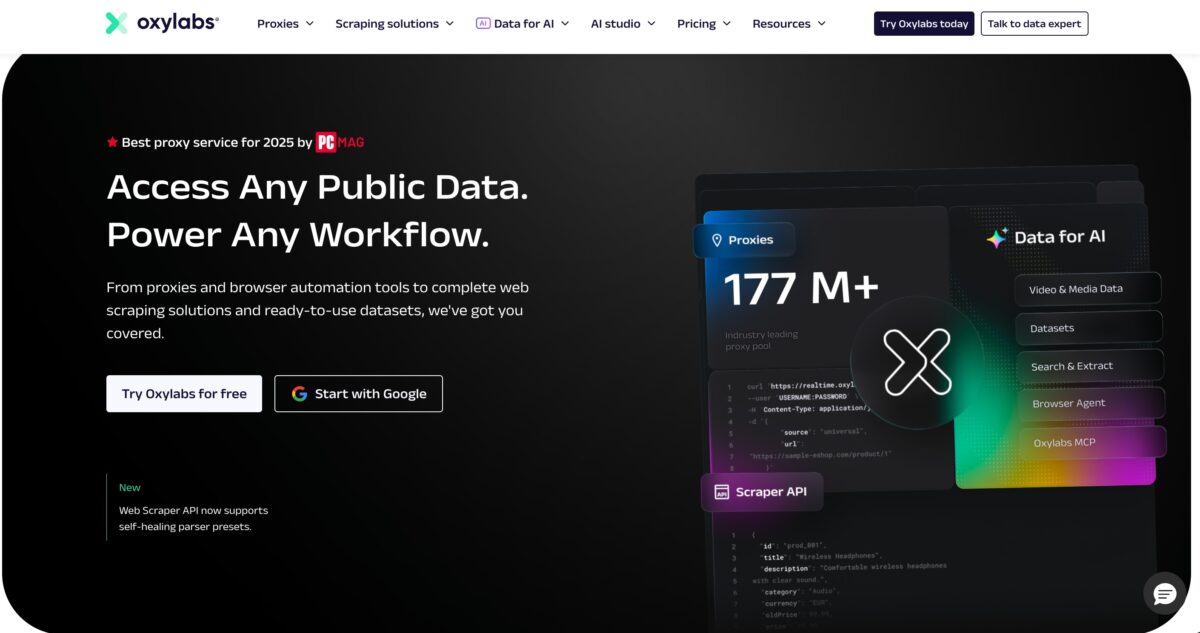
Oxylabs is the e-commerce proxy choice for enterprise retailers and data-intensive SaaS platforms.
Their eCommerce Scraper API — part of the Web Scraper API suite — handles Amazon, eBay, Walmart, and other major marketplace scraping automatically, managing IP rotation, CAPTCHA bypass, and data parsing to deliver structured product data including prices, reviews, inventory status, and seller metrics.
For e-commerce businesses that need competitor pricing data at scale, this API-first approach eliminates the engineering overhead of building and maintaining custom scraping solutions.
The 100M+ residential IP pool with country/city targeting enables accurate, geo-specific price collection — critical for retailers who sell across multiple regions where competitor pricing varies by location.
The Web Unblocker’s AI-powered anti-detection handles Amazon’s notoriously aggressive bot protection, maintaining high success rates even as Amazon continuously updates its detection algorithms.
Best SaaS Use Case: SaaS platforms offering dynamic pricing tools for enterprise e-commerce brands can use Oxylabs’ eCommerce Scraper API to collect real-time competitor pricing data from Amazon, Walmart, and regional marketplaces simultaneously, feeding that data into pricing algorithms that automatically adjust client prices to maintain competitive positioning.
#2 — Decodo: Best Value E-Commerce Proxy
Website: decodo.com | Starting Price: eCommerce Scraping API from $0.08/1K requests; Residential from $2/GB
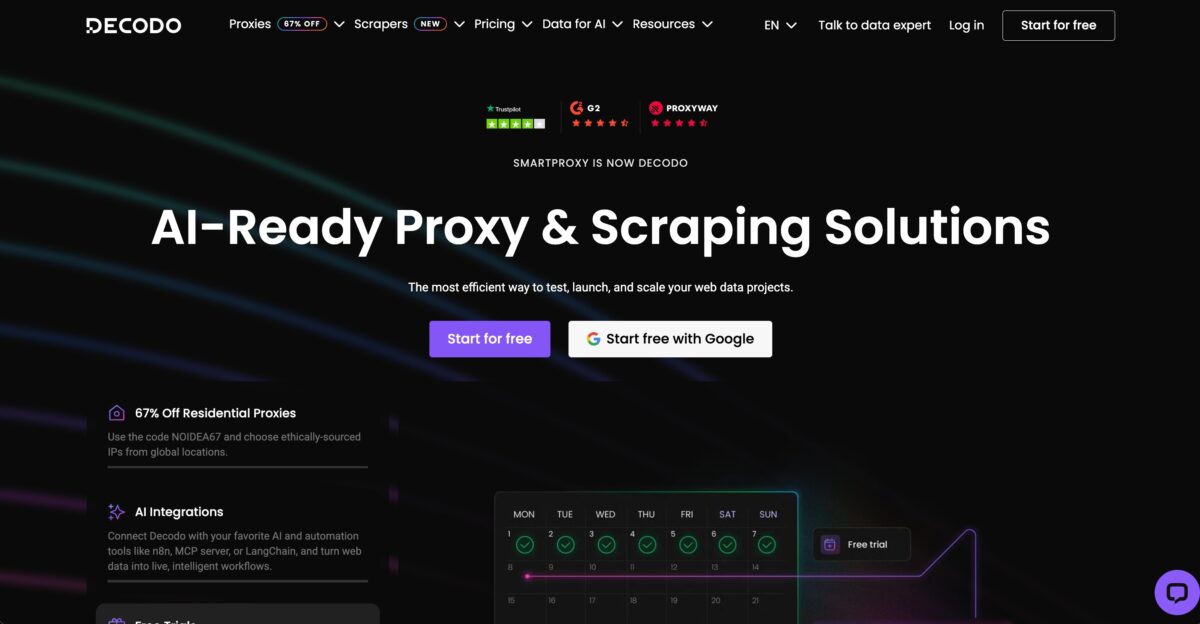
Decodo’s eCommerce Scraping API at $0.08/1,000 requests is one of the most cost-effective e-commerce data collection solutions available.
The API handles major e-commerce platforms automatically, returning structured product data without requiring custom parsers or anti-detection engineering. At $2/GB for residential proxies, the raw proxy option is equally competitive for e-commerce teams who prefer to manage their own data extraction logic.
The price aggregation use case is explicitly highlighted in Decodo’s official documentation — “Track competitor and market prices in real time. Our proxies and Web Scraping API deliver localized, accurate data to power smarter pricing models and dashboards.”
This direct alignment with e-commerce use cases extends to their multi-accounting support (via sticky proxies and the free X Browser), which is valuable for e-commerce sellers managing multiple marketplace accounts.
Best SaaS Use Case: SaaS companies building repricing tools for Amazon sellers — automatically adjusting product prices in response to competitor price changes — can use Decodo’s eCommerce Scraping API to continuously monitor competitor ASIN prices across multiple Amazon marketplaces, feeding real-time price alerts into the repricing engine.
#3 — Webshare: Best E-Commerce Proxy for Startups and Developers
Website: webshare.io | Starting Price: Free (10 proxies), Rotating Residential from $3.50/month
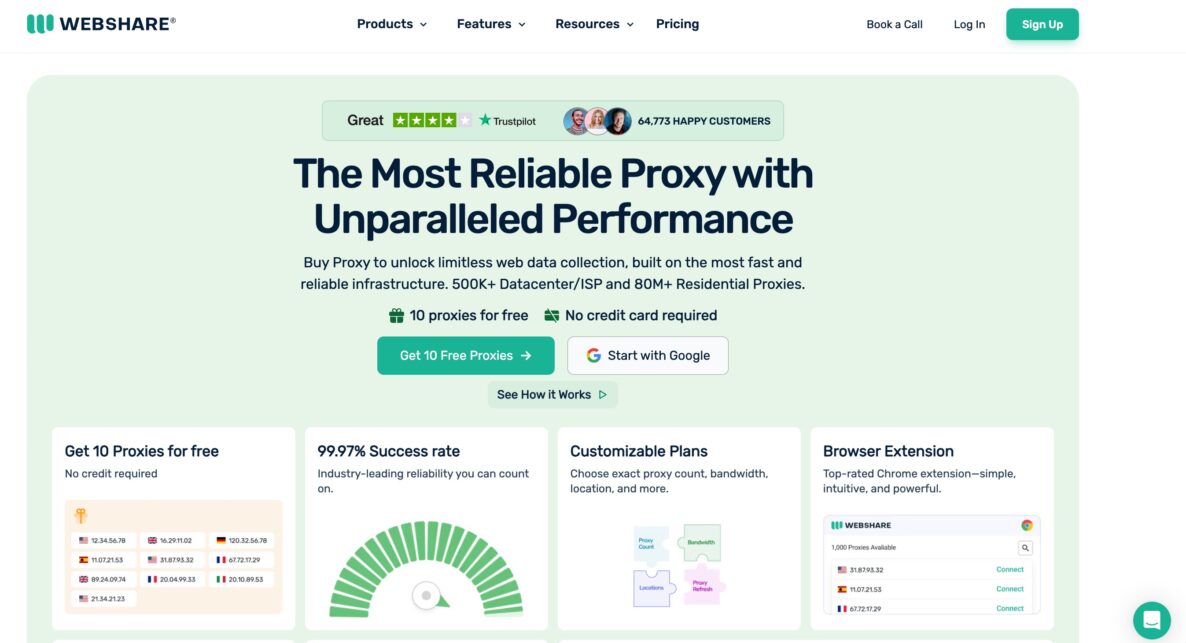
Webshare explicitly lists “Pricing Intelligence” and “Public Data” as core use cases for their proxy network. Their documentation notes: “Implement price analysis, ecommerce scraping & take advantage of public product price data.”
With 80M+ global IPs and a 99.97% success rate, the infrastructure handles e-commerce scraping reliably at the scale appropriate for startups and growing e-commerce teams.
The free tier makes Webshare ideal for e-commerce entrepreneurs and developers who want to test price monitoring scrapers before committing to infrastructure costs.
The Static Residential proxies (ISP proxies from major carriers) are particularly useful for e-commerce platforms that require trusted, stable IP addresses for marketplace account access — where consistent IP identity matters as much as anonymity.
Best SaaS Use Case: E-commerce SaaS startups building price comparison tools for niche product categories can use Webshare’s free residential proxies to collect initial price data from target marketplaces during the product validation phase, then scale to paid plans as paying customers onboard and data volume requirements grow.
#4 — Bright Data: Best E-Commerce Proxy with Pre-Built Datasets
Website: brightdata.com | Starting Price: Pay-as-you-go, free to start
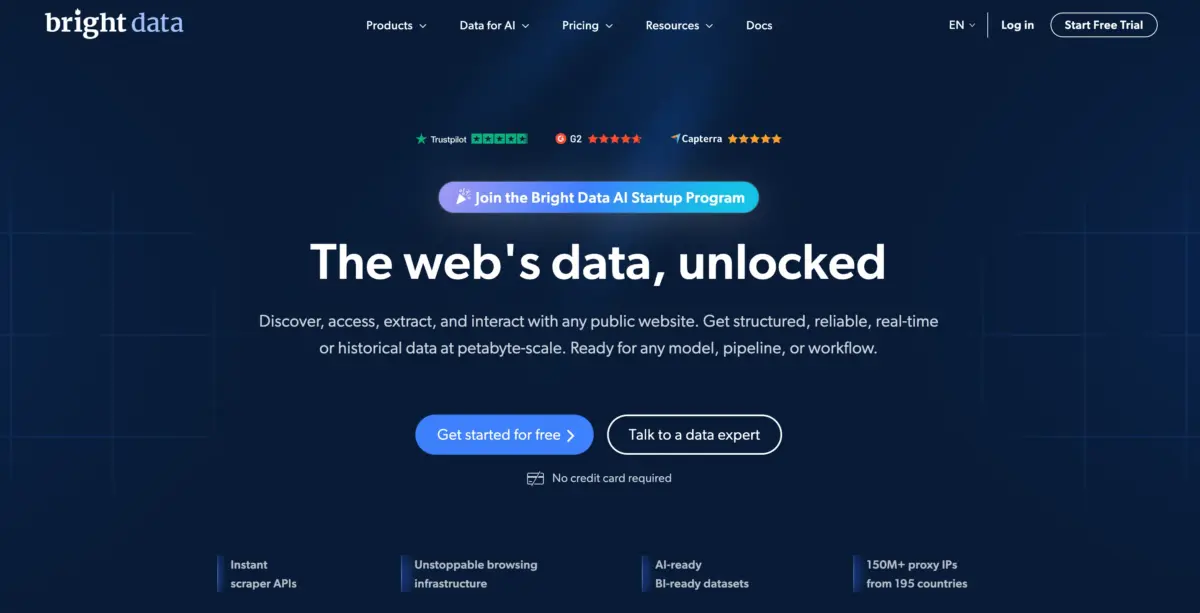
Bright Data’s e-commerce use case gets dedicated platform support — their documentation explicitly covers competitor price scraping, product availability tracking, and review data extraction at petabyte scale.
What sets them apart for e-commerce specifically is the availability of pre-built e-commerce datasets: structured product data from Amazon, eBay, Walmart, and other major marketplaces covering 5B+ records, regularly refreshed and available via API — letting SaaS teams access e-commerce data without scraping at all for common data categories.
The 20,000+ customer base includes major e-commerce brands and data providers who rely on Bright Data’s 150M+ IP network for continuous price monitoring at global scale. The 99.99% uptime SLA ensures that data collection doesn’t pause when pricing decisions are time-sensitive.
Best SaaS Use Case: Enterprise e-commerce SaaS platforms that deliver daily competitive pricing intelligence to major retail brands can use Bright Data’s pre-built e-commerce datasets for common marketplace data, supplemented by real-time residential proxy scraping for unique or time-sensitive data points — combining dataset efficiency with scraping flexibility in one platform.
#5 — SOAX: Best E-Commerce Proxy for Multi-Region Price Collection
Website: soax.com | Starting Price: Starter $90/month (25GB at $3.60/GB)
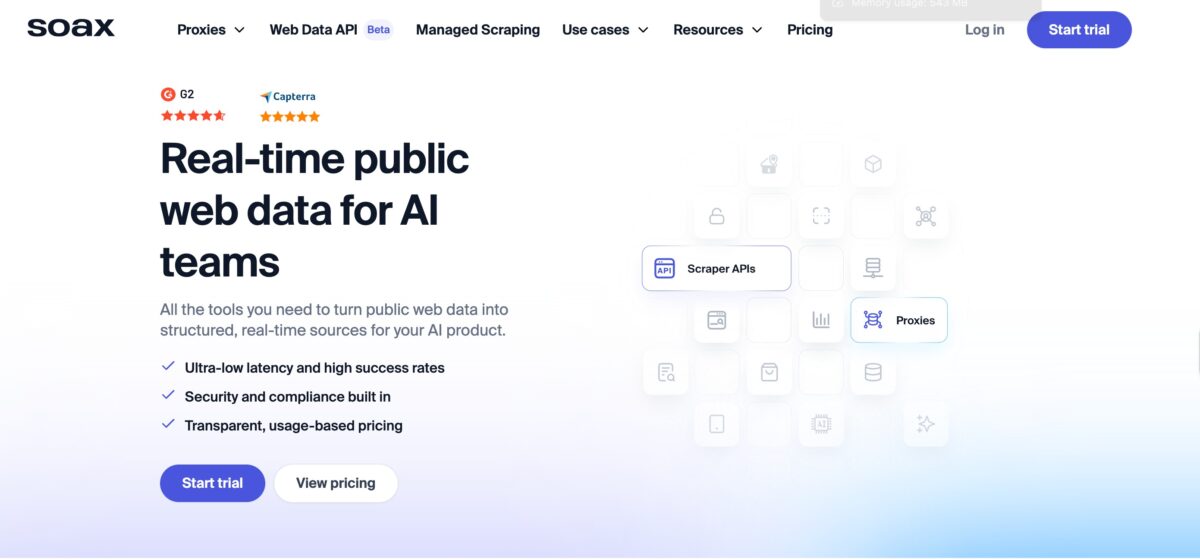
SOAX’s granular geo-targeting — down to country, region, city, and ISP — makes it uniquely powerful for e-commerce price monitoring across different regional markets.
Many e-commerce platforms and marketplace sellers price differently based on user location, IP reputation, and carrier. SOAX’s targeting precision lets your price monitoring tool see exactly what a specific type of user in a specific location sees — including location-specific promotions, regional pricing, and carrier-specific discount offers that single-location proxies would miss entirely.
The Web Data API delivers 100% success rates on major e-commerce targets including Amazon and other large marketplaces, handling JavaScript-rendered product pages and dynamic pricing content that requires full browser interaction to capture accurately.
Best SaaS Use Case: SaaS platforms building cross-border e-commerce intelligence tools — helping brands understand how their products and competitors’ products are priced in different international markets — can use SOAX’s multi-region residential proxies to collect accurate, location-specific pricing data from the same product pages as seen by local shoppers in each target market.
#6 — IPRoyal: Best E-Commerce Proxy for Account Management
Website: iproyal.com | Starting Price: Static residential from per-lease pricing; rotating from $1.75/GB bulk
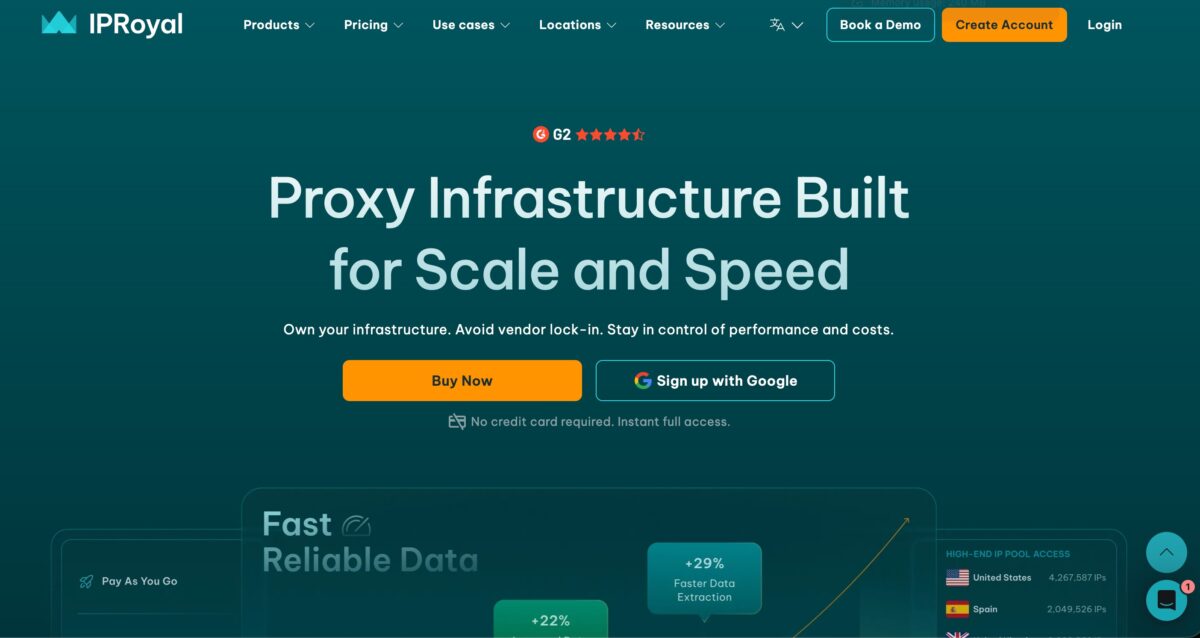
IPRoyal’s static residential (ISP) proxies with unlimited bandwidth are ideal for e-commerce sellers who manage multiple marketplace accounts.
Each seller account can be assigned a dedicated, stable ISP address that maintains a consistent location and carrier profile — exactly how a legitimate individual seller operates. The unlimited bandwidth means that ongoing account activity doesn’t hit unexpected bandwidth caps that could interrupt critical selling operations.
The non-expiring traffic model for rotating residential proxies also benefits e-commerce teams that run intensive scraping campaigns around key commercial events (Black Friday, Prime Day, holiday seasons) and then return to lower-frequency monitoring between events.
Best SaaS Use Case: SaaS platforms that help e-commerce agencies manage multiple client seller accounts across Amazon and eBay can use IPRoyal’s dedicated static residential proxies to assign a stable, exclusive ISP-level identity to each client’s account — eliminating the cross-account association risk that comes from sharing IP addresses between different clients.
#7 — Proxy-Cheap: Best Budget E-Commerce Proxy
Website: proxy-cheap.com | Starting Price: Up to 40% off rotating residential and mobile
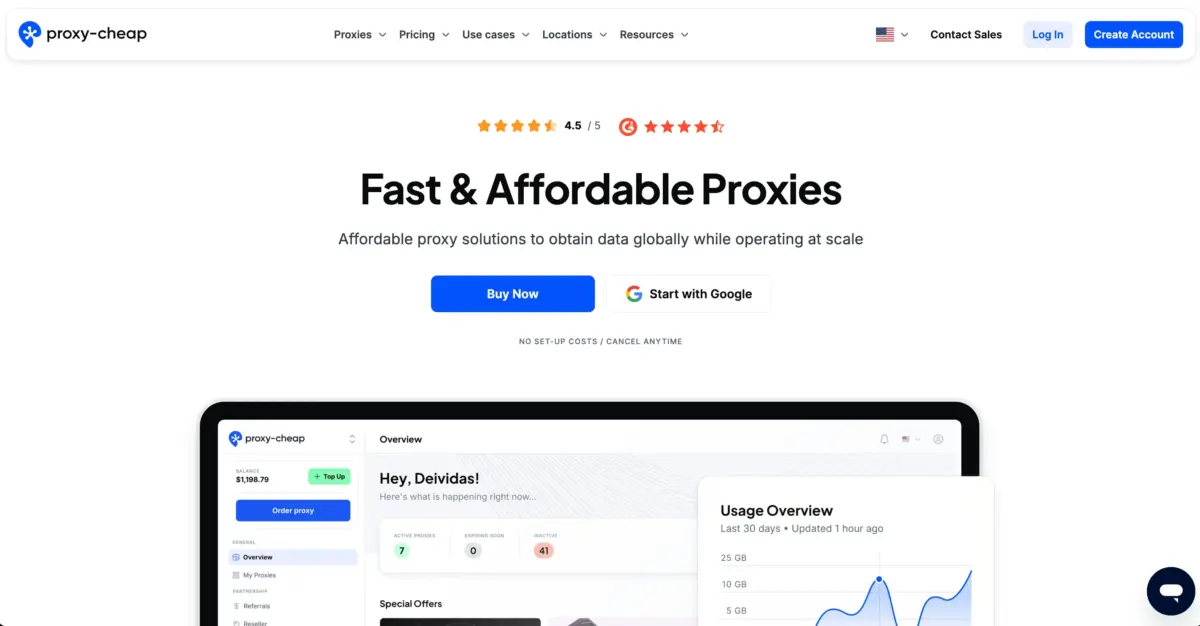
Proxy-Cheap serves 45,000+ customers including active e-commerce users who need reliable rotating residential proxies for price monitoring and competitor scraping at budget-friendly prices.
The current 40% discount on rotating residential proxies makes this the most affordable professional option for small e-commerce businesses and independent sellers who need proxy infrastructure but can’t justify enterprise pricing.
HTTP, HTTPS, and SOCKS5 protocol support across IPv4 and IPv6 covers all major scraping framework configurations for e-commerce data collection tools.
Best SaaS Use Case: Small e-commerce SaaS tools that help independent sellers track competitors’ pricing on a handful of platforms can use Proxy-Cheap’s affordable rotating residential proxies to run hourly price checks across target products — delivering actionable competitive intelligence at a cost that’s proportional to the modest pricing that small independent seller customers can afford to pay.
#8 — ProxyEmpire: Best E-Commerce Proxy for Flexible Data Collection
Website: proxyempire.io | Starting Price: Residential from $9/GB; $1.97 trial
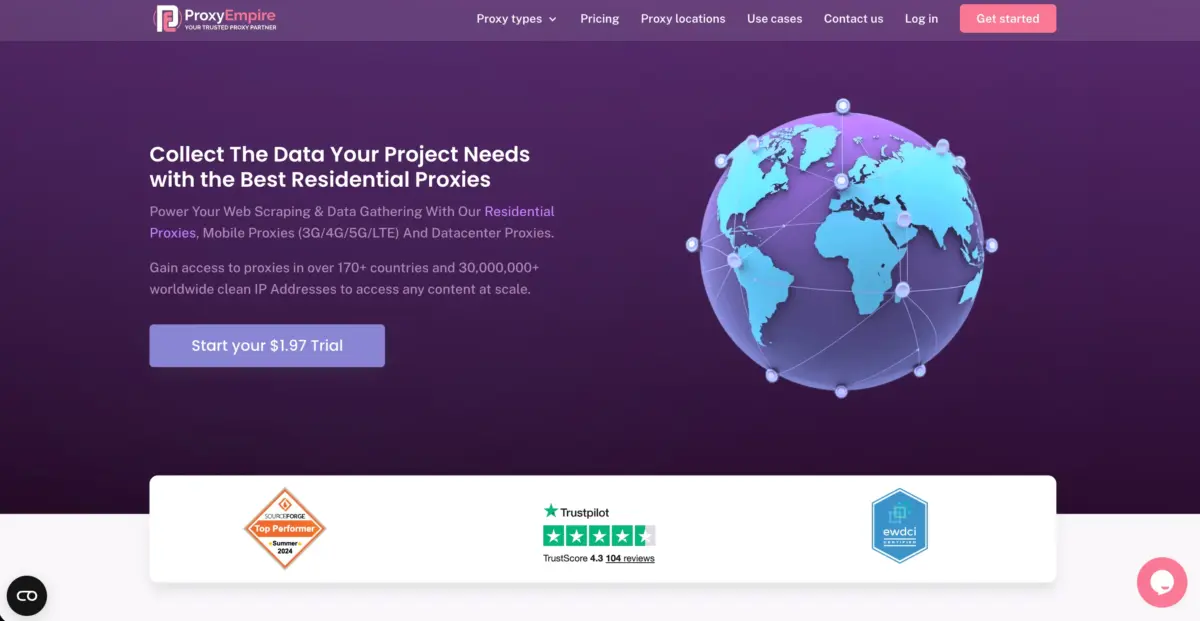
- 30M+ residential IPs, 170+ countries
- Unlimited data rollover; rotating and sticky sessions
- HTTP/HTTPS/SOCKS5; 4G/5G mobile proxies
- 4.5/5 Trustpilot; country and city-level targeting
ProxyEmpire’s rollover model aligns naturally with e-commerce data collection patterns — intensive competitor price monitoring around product launches, seasonal sales events, and Black Friday campaigns, followed by lighter monitoring in between.
The non-expiring bandwidth means e-commerce teams can pre-purchase proxy capacity for high-demand periods and carry any unused allocation forward rather than losing it at month-end.
Best E-Commerce Use Case: E-commerce SaaS platforms that run intensive competitor price monitoring campaigns around major retail events like Black Friday and Prime Day can purchase ProxyEmpire’s bulk residential bandwidth ahead of each event window, consuming it across the intensive monitoring period and carrying any remainder forward to the next campaign cycle.
#9 — DataImpulse: Best Budget E-Commerce Proxy
Website: dataimpulse.com | Starting Price: $1/GB pay-as-you-go
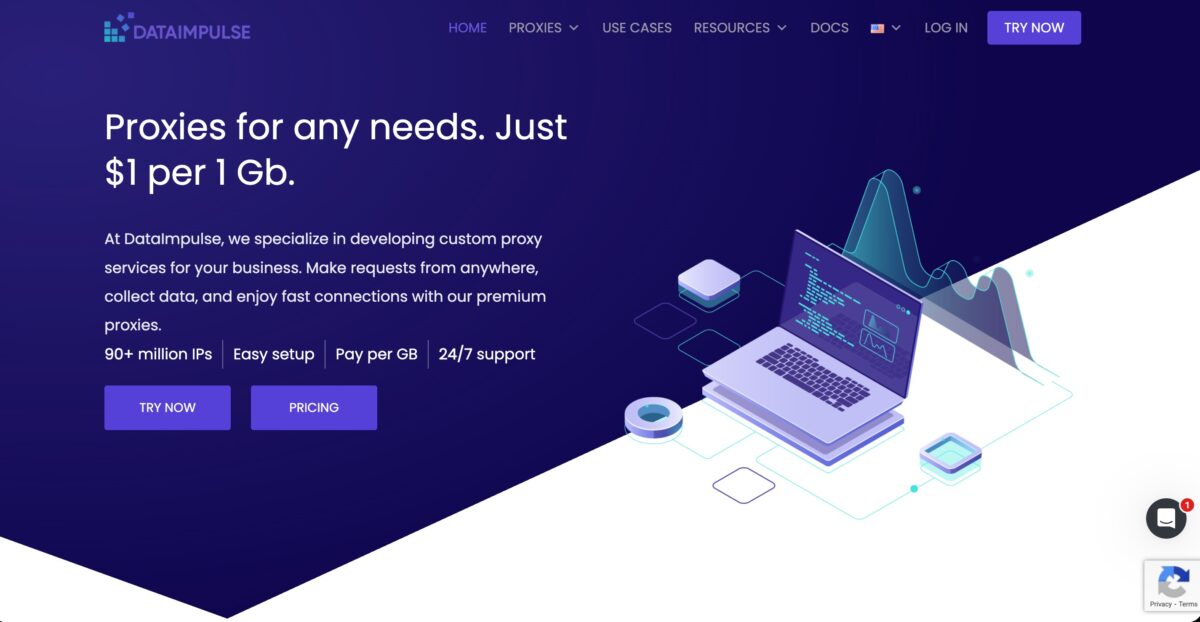
- 90M+ residential IPs, 150+ countries
- Pay-as-you-go; traffic never expires; no subscription
- Rotating and sticky sessions; HTTP/HTTPS/SOCKS5
- City and ZIP-code level targeting; simple dashboard
DataImpulse’s $1/GB pay-as-you-go model makes e-commerce price monitoring infrastructure accessible for startups and independent sellers who need residential proxy access without enterprise pricing.
The ZIP-code level targeting — an uncommon feature at this price point — enables hyper-local price collection from specific US zip codes, capturing the regional pricing variations that city-level proxies miss on platforms like Walmart.
Best E-Commerce Use Case: E-commerce SaaS startups building price comparison tools for niche product categories can use DataImpulse’s $1/GB model to collect initial pricing data from target marketplaces during product validation, with ZIP-code targeting enabling local price variation capture that adds differentiated value versus competitors offering only country-level geo-targeting.
FAQs: Best Proxies for E-Commerce in 2026
What proxy type works best for Amazon scraping?
Residential rotating proxies are the most effective for Amazon scraping because Amazon’s bot detection aggressively blocks datacenter IPs. ISP proxies offer a good balance of speed and trust for Amazon product monitoring. Purpose-built eCommerce Scraping APIs (from Oxylabs and Decodo) are the most reliable option for consistent Amazon data extraction.
How do proxies help with e-commerce multi-account management?
Each marketplace account needs a unique, stable IP address to avoid association with other accounts. Dedicated or static residential (ISP) proxies assign exclusive IP identities to individual accounts, preventing cross-account linking that triggers platform bans.
Can I use proxies to check competitor prices automatically?
Yes — this is one of the most common e-commerce proxy use cases. Rotating residential proxies combined with a web scraper collect competitor prices from any public product listing page. Purpose-built eCommerce Scraping APIs from Oxylabs and Decodo deliver structured price data without custom parsing.
How often should I run e-commerce price monitoring?
It depends on how frequently your competitors change prices. For highly competitive categories like electronics and consumer goods, hourly monitoring is standard. For slower-moving categories, daily checks are typically sufficient. Choose a proxy plan with enough bandwidth for your monitoring frequency.
Also, Read This:
- Best Proxies For Instagram
- Best Proxies for Affiliate Marketing
- Best Proxies for E-Commerce
- Best Proxies for Price Monitoring
- Best Proxies for Market Research
Conclusion: Best Proxies for E-Commerce in 2026
E-commerce data is a competitive advantage that compounds over time — the team with the most accurate, up-to-date pricing and product intelligence consistently makes better decisions than those flying blind.
In 2026, the proxy infrastructure behind that intelligence separates effective e-commerce operations from ones that rely on guesswork.
Oxylabs and Bright Data lead for enterprise e-commerce data operations. Decodo’s eCommerce Scraping API at $0.08/1K requests is the best value for growing teams.
Webshare gets startups into e-commerce scraping for free. And IPRoyal’s dedicated static proxies solve the account management problem better than any shared-pool alternative.
Comments
Be the first to leave a comment.