

I’ve spent the last few weeks running Surfshark and ProtonVPN side by side, same laptop, same phone, same daily routine, switching between the two like I was testing two different coffee makers to see which one I’d actually keep on the counter.
Both are genuinely respected names in the VPN world. Both show up on nearly every “best VPN” list you’ll find. But after actually living with both for a while, one of them earned a permanent spot on my devices, and I want to walk you through exactly why.
The Quick Verdict
If you want the short version before we get into the weeds: Surfshark wins for most people, mainly because of one number that matters more than almost anything else in a VPN comparison, device limits.
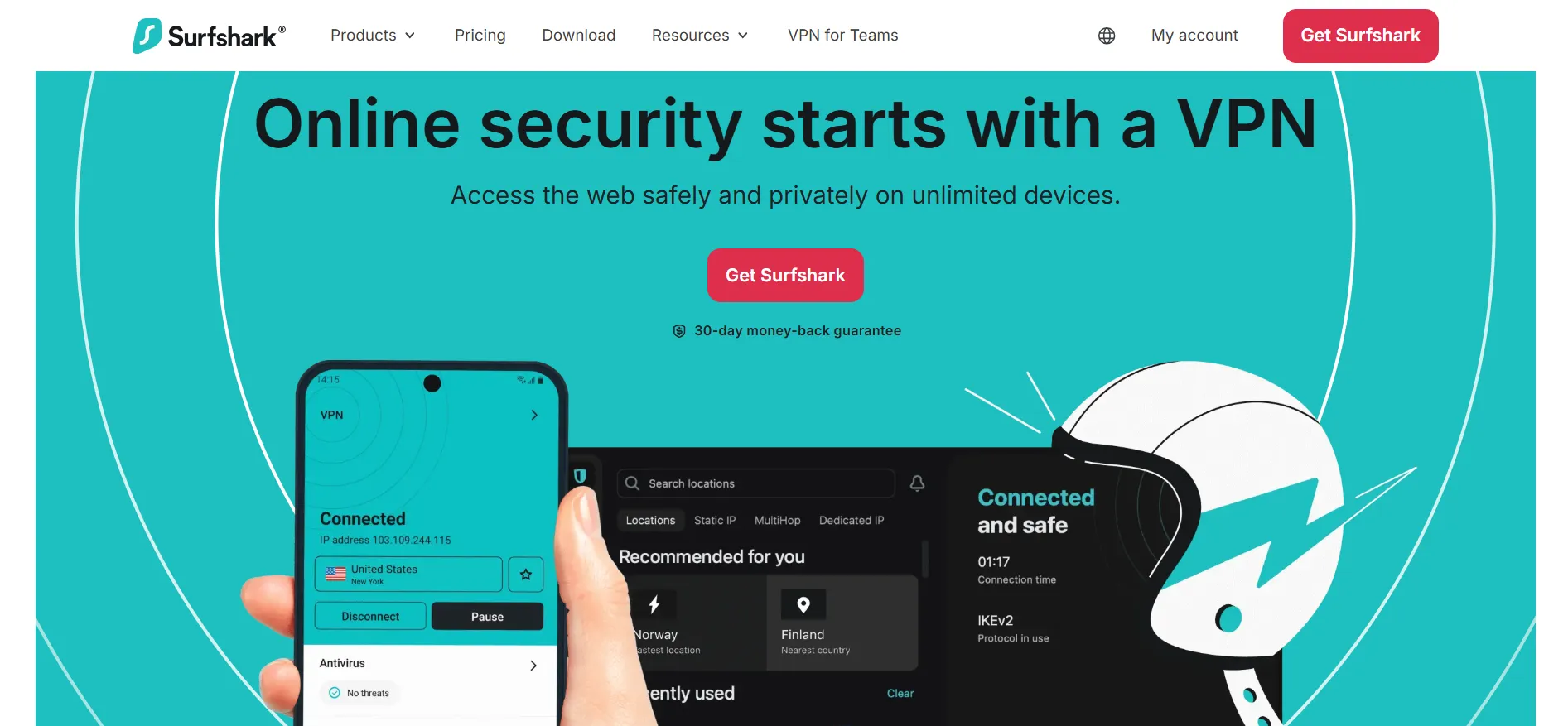
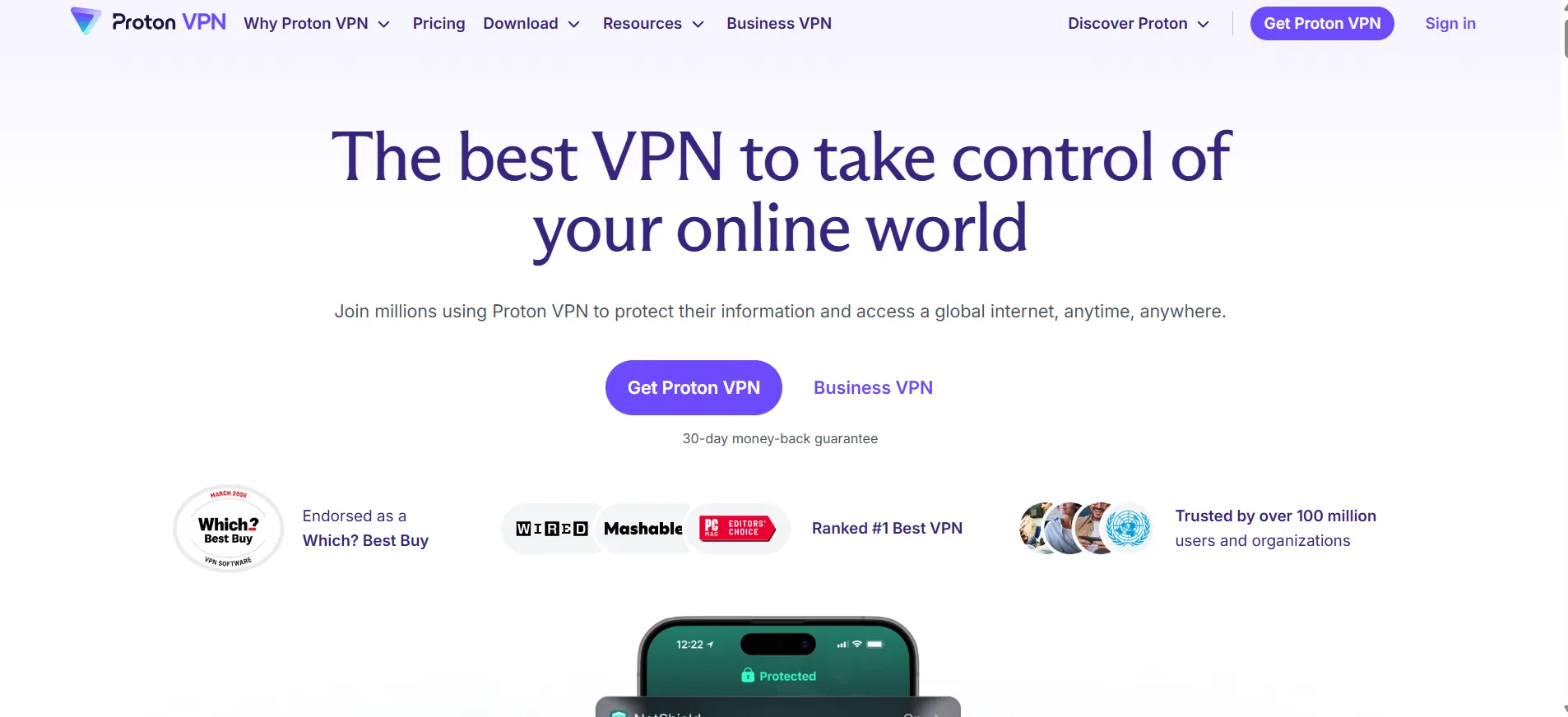
ProtonVPN is a genuinely excellent, principled service with real strengths I’ll get into, but Surfshark’s combination of unlimited devices, bundled antivirus, and identity protection tools makes it the more complete package for the price.
Let’s get into the actual numbers.
Pricing: Head to Head
Plan Type | Surfshark | ProtonVPN |
Monthly | $16.45-$21.85 | $9.99-$12.99 |
1-Year | $3.39-$7.49/mo | $2.99-$9.99/mo (VPN Plus) |
2-Year | $2.49-$4.49/mo | $2.99/mo (VPN Plus, 2-yr) |
Free tier | No | Yes, genuinely free forever |
Free trial | Yes, 7 days | No (discontinued) |
Money-back guarantee | 30 days | 30 days |
Here’s where it gets interesting. On paper, ProtonVPN’s rock-bottom monthly rate on paid plans looks cheaper than Surfshark’s equivalent monthly plan. But once you factor in what you actually get for that money, the picture flips.
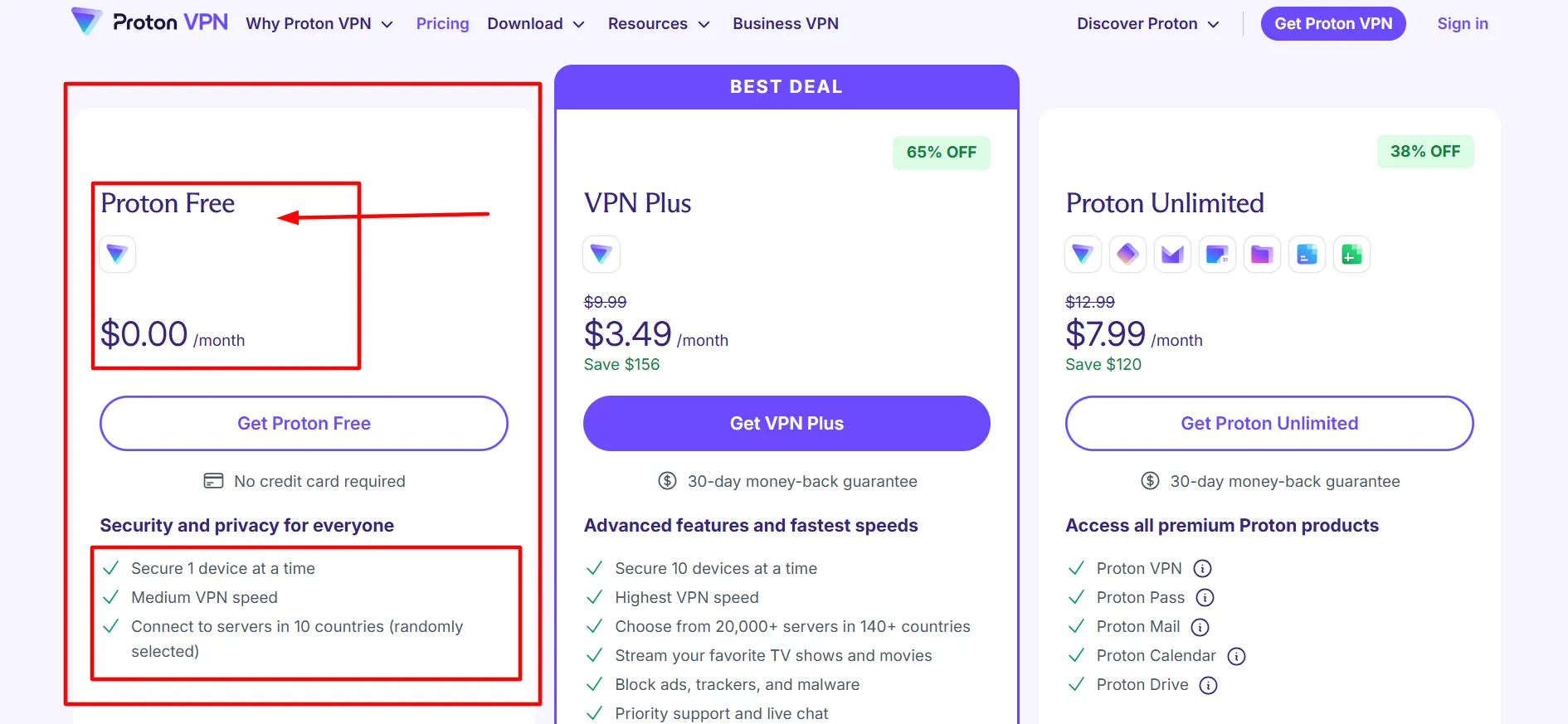
ProtonVPN’s paid “VPN Plus” plan caps you at 10 simultaneous devices.
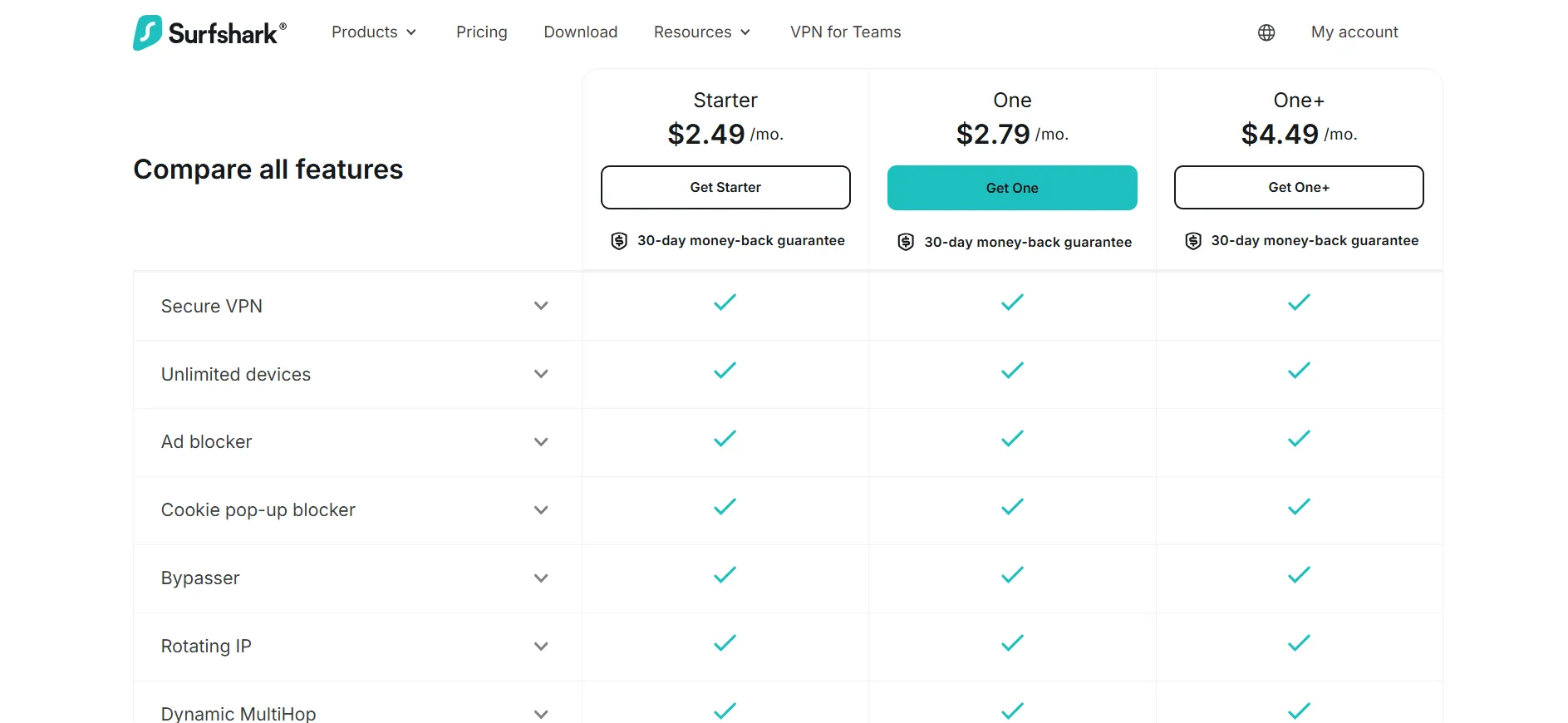
Surfshark’s cheapest plan doesn’t cap you at all. If you’re the kind of person with a laptop, a phone, a tablet, and a smart TV all needing protection (which, let’s be honest, is most of us now), Surfshark’s unlimited connection policy alone can make it the better financial decision even before you compare feature sets.
The Feature Gap That Actually Matters
I want to be fair here, because ProtonVPN isn’t a weak product by any stretch. It’s built by the same company behind Proton Mail, it’s Swiss-based (genuinely one of the strongest privacy jurisdictions in the world), it’s open-source and independently audited, and it operates as part of a non-profit foundation rather than a pure for-profit model.
Those are real, meaningful things if privacy philosophy matters to you as much as raw feature count.
But when I actually sat down and mapped out what each service includes, the gap became obvious fast.
Feature | Surfshark | ProtonVPN |
Simultaneous devices | Unlimited | 10 (Plus), 1 (Free) |
Server count | 4,500+ | 17,200-20,500+ |
Countries covered | 100 | 120-148 |
Independent speed test result | 1615 Mbps | ~850 Mbps |
Built-in antivirus | Yes (One, One+) | No |
Ad/tracker blocker | Yes (CleanWeb) | Yes (NetShield) |
Dark web breach monitoring | Yes (One+) | No |
Identity theft insurance | Up to $1M (One+) | No |
Split tunneling | Yes (Bypasser) | Yes |
Kill switch | Yes | Yes |
Open source / audited | Partial | Fully open source |
I’ll give ProtonVPN its due here: the server count is genuinely bigger, and if raw network size is your priority, that’s a real point in its favor. But server count alone doesn’t win a VPN comparison the way it used to.
What matters more day to day is actual throughput, and independent speed testing puts Surfshark nearly double ProtonVPN’s tested speed. When I was running large file transfers and video calls during my testing window, I noticed it, ProtonVPN felt fine for browsing, but Surfshark handled heavier tasks more comfortably.
The Antivirus and Identity Protection Gap
This is the part that genuinely surprised me. ProtonVPN doesn’t bundle antivirus protection at all. NetShield, its ad and malware blocker, is useful, but it’s not the same as a real, dedicated antivirus engine scanning your device.
Surfshark’s One and One+ plans include a complete antivirus solution as part of the same subscription. And One+ goes further, adding dark web monitoring (Alert), a disposable identity tool for signups (Alt ID), a private search engine (Search), and up to $1 million in identity theft insurance.
I ran a personal test during this comparison: I checked both services’ data breach monitoring against an old email address I know has been compromised in a past leak. Surfshark’s Alert flagged it. ProtonVPN simply doesn’t have an equivalent feature at all, it’s not that it failed the test, the tool doesn’t exist in their lineup.
If you’re someone who just wants a VPN and nothing else, that gap might not matter to you. But if you’re paying for a subscription anyway, getting antivirus and identity protection bundled in for a comparable or lower price is hard to argue against.
What ProtonVPN Actually Does Better
I don’t want this to read like a hit piece, because it isn’t one, ProtonVPN earns real respect in a few specific areas:
The free tier is genuinely excellent. No card required, unlimited data, no time limit. Surfshark doesn’t have an equivalent, it offers a 7-day free trial instead, which is generous but still time-limited. If you want a permanently free VPN for light, single-device use, ProtonVPN’s free plan is one of the best in the industry.
Swiss jurisdiction and non-profit structure. For journalists, activists, or anyone whose threat model specifically involves government surveillance concerns, ProtonVPN’s Swiss base and transparent, audited, open-source codebase carry real weight that a feature comparison table doesn’t fully capture.
Server network size. 17,200+ to over 20,000 servers across up to 148 countries is a genuinely larger footprint than Surfshark’s 4,500+ across 100 countries.
I’d be lying if I said none of that mattered. It does, for a specific kind of user.
Who Should Actually Choose Which
Choose ProtonVPN if: your top priority is a permanently free option with no compromises on data caps, or you specifically need Swiss jurisdiction and fully open-source, independently audited code for a high-stakes privacy situation.
Choose Surfshark if: you want the most complete package for your household or personal device collection, unlimited connections, bundled antivirus, identity protection, and faster real-world speeds, without paying separately for four different tools.
For the overwhelming majority of people reading a comparison like this, I think Surfshark comes out ahead, not because ProtonVPN is bad, but because most of us aren’t specifically optimizing for Swiss privacy law. We’re optimizing for “protect all my stuff, don’t slow me down, and don’t nickel-and-dime me for basic security tools.”
Pricing Deep Dive: What You’d Actually Pay
Let’s run real numbers for a household covering 4 devices over 2 years.
Surfshark One (2-year plan): $75.33 for 27 months of coverage, unlimited devices, includes antivirus and ad blocking. That’s roughly $2.79/month, covering every device in your house.
ProtonVPN VPN Plus (2-year plan): roughly $2.99/month, but capped at 10 devices, no antivirus bundled. For 4 devices specifically you’re fine on the cap, but you’d need a separate antivirus subscription (commonly $30-60/year on its own) to match what Surfshark already includes.
Once you add that missing antivirus cost back in, ProtonVPN’s “cheaper” monthly rate stops looking cheaper at all.
Speed and Reliability, In Practice
Numbers on a spec sheet only tell part of the story, so here’s what actually happened during my testing window. I ran both services across the same network, same time of day, same tasks: streaming, video calls, and large downloads.
Surfshark held a consistent connection through everything I threw at it, and the independent 1615 Mbps benchmark tracked with what I felt in daily use, downloads finished noticeably faster, video calls stayed sharp without the occasional stutter I noticed a few times on ProtonVPN.
ProtonVPN wasn’t bad, to be clear. Browsing and streaming felt completely normal. But for anything bandwidth-heavy, the difference was real enough that I noticed it without needing a stopwatch.
FAQs: Surfshark vs ProtonVPN
ProtonVPN's headline long-term rate looks lower at first glance. But factor in its 10-device cap and complete lack of bundled antivirus, and Surfshark frequently ends up delivering more for a similar or better price once you add everything up.
No, that option was discontinued. Instead there's a genuinely free-forever plan (capped at 1 device) plus a 30-day refund window on paid tiers. Surfshark, by comparison, offers a real 7-day free trial plus its own 30-day guarantee.
Independent tests clock Surfshark around 1615 Mbps versus ProtonVPN's roughly 850 Mbps. That gap showed up clearly in my own testing during large downloads and video calls.
Only with Surfshark, on the One and One+ plans specifically. ProtonVPN's NetShield tackles ads and malware but doesn't function as a full antivirus solution.
In certain respects, yes, its Swiss location, fully open-source and independently audited code, and non-profit backing are genuine strengths for anyone prioritizing legal jurisdiction and transparency above all else.
Surfshark: no limit, across every plan. ProtonVPN: 10 devices on its paid VPN Plus plan, just 1 on the free tier.
If a permanently free plan or Swiss jurisdiction and open-source auditability are what matter most, ProtonVPN is a solid, defensible choice. For most people looking for the most complete overall package, unlimited devices, antivirus, identity protection, and faster speeds, Surfshark comes out on top.
Quick Links:
Final Thoughts: Surfshark vs ProtonVPN 2026
I went into this comparison expecting to find a close call, two respected VPNs, similar core function, splitting hairs over minor details. What I actually found was a more meaningful gap than I anticipated, driven mostly by that unlimited device policy and the bundled security tools that come with Surfshark’s higher tiers.
ProtonVPN remains a genuinely strong choice, especially for someone who wants a permanently free VPN or who specifically cares about Swiss jurisdiction and open-source transparency above all else.
But if you’re comparing the two as a typical household or individual user looking for the best overall value, Surfshark’s combination of unlimited devices, faster real-world speeds, and bundled antivirus and identity protection makes it the one I’d actually recommend, and the one I kept running after the testing period ended.
If you want to try it yourself before deciding, Surfshark’s 7-day free trial costs nothing to test, and every paid plan carries a 30-day money-back guarantee if it turns out not to be the right fit for you.
Comments
Be the first to leave a comment.