
Twilio pioneered SMS and voice communications for developers. It still works great for teams with dedicated engineers building custom stacks.
But most teams today just want to send campaigns quickly, get approvals fast, and have predictable pricing. Twilio wasn’t built for that speed. Signal House offers fast A2P approval, no-code setup, and transparent pricing without premium support tiers.
Compare the Best Twilio Alternatives in 2026
Explore the Best SMS and messaging API platforms that offer faster approval, transparent pricing, better support, and cost savings compared to Twilio for your business needs.
| Best For | Twilio alternative for the vast majority of teams sending business SMS | technical teams that want granular, programmable control over telecom infrastructure | large enterprises that need carrier-grade infrastructure and have the engineering headcount to run it | global, multi-channel programs spanning SMS, WhatsApp, RCS, email, and voice | developers who want a lean, cost-focused SMS API and don't mind managing more of the messaging layer themselves | organizations that want one broad CPaaS ecosystem covering messaging, voice, video, and verification |
| Pricing | $0.0065/SMS (no minimum), scales down to $0.0030/SMS at 10M+ volume monthly | $0.004/SMS base rate, scales to $0.0005/SMS at 1B+ volume | $0.006/SMS (10DLC), $0.0075 (Toll-free), scales with volume | $49-$799/month plans, SMS at $0.0249-$0.033 per message | $0.0077/SMS base, custom plans, starts at $500/month enterprise | $0.0086/SMS (send), variable by channel, tiered Reports API |
| Features | SMS, MMS, Voice, fast A2P approval (72 hours), white-label, bulk porting | SMS, MMS, RCS, Voice API, global reach, carrier infrastructure | SMS, MMS, Voice, direct network ownership, enterprise support | SMS, MMS, WhatsApp, RCS, Email-to-SMS, multi-channel campaigns | SMS, WhatsApp, Voice API, Verify, SIP trunking | SMS, MMS, RCS, WhatsApp, multi-channel messaging, Voice |
| Strength | Transparent pricing, free support for all plans, 70-90% cheaper than Twilio | Granular control, technical teams, direct-to-carrier, 30% savings vs CPaaS | Carrier-grade infrastructure, large enterprises, direct infrastructure control | Global multi-channel, ease of use, 14-day free trial, no-code setup | Lean, cost-focused, developers, simplified messaging layer | Broad CPaaS ecosystem, enterprise coverage, unified platform |





6 Best Alternatives to Twilio This Year
1. Signal House: The best overall Twilio alternative for most teams
Signal House was built around a simple observation: most teams sending business SMS today are not telecom engineers, and they shouldn’t have to think like one just to launch a campaign.
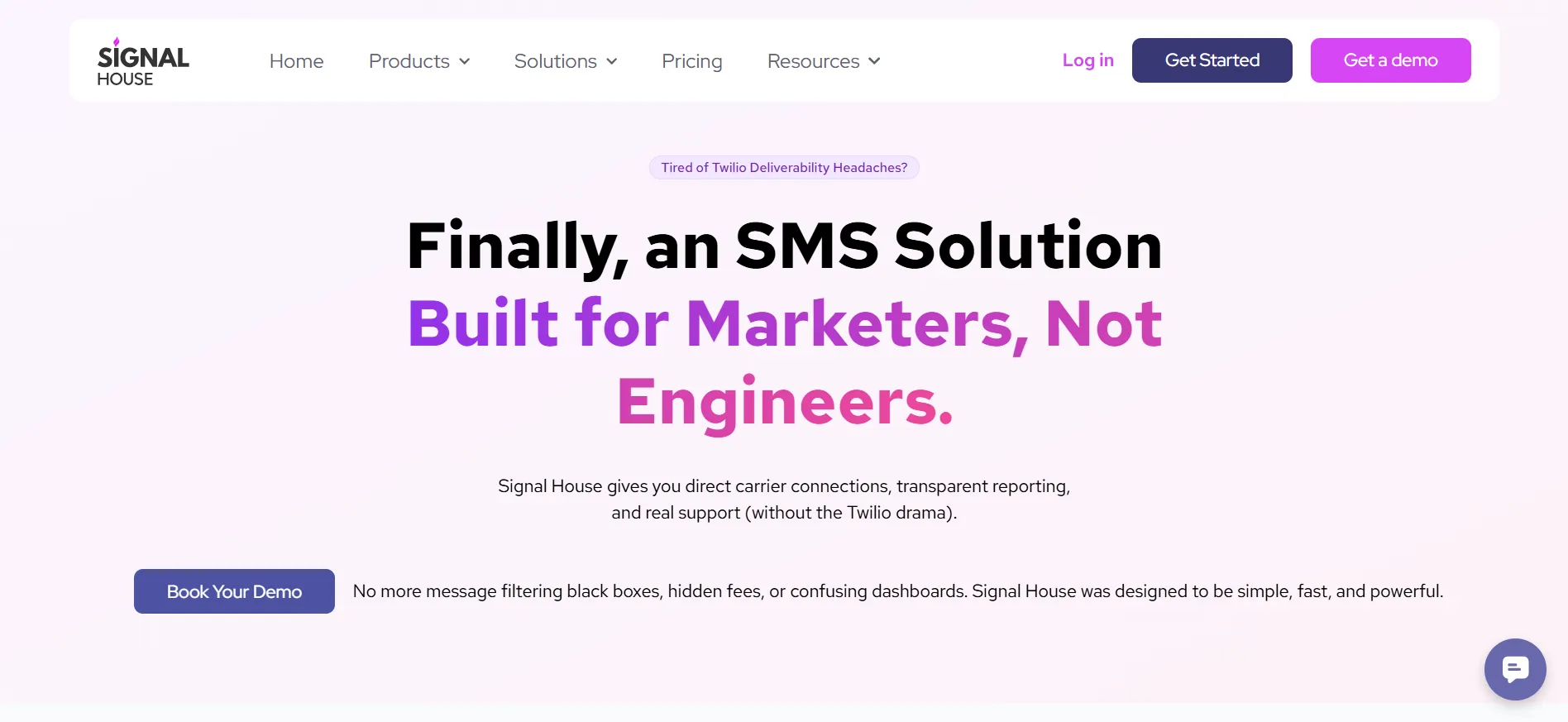
The platform is built for how teams actually operate in 2026, automation-friendly, AI-compatible, no-code by default, with real people backing up the software rather than a support ticket queue that goes nowhere.
Approval speed: Signal House can clear A2P registration in about 48 hours for most standard campaign types.
That’s the difference between a launch that happens this week and one that slips into next month while you wait on carrier sign-off.
Pricing: The pricing is flat and stated up front, not usage-based with fees that surface later.
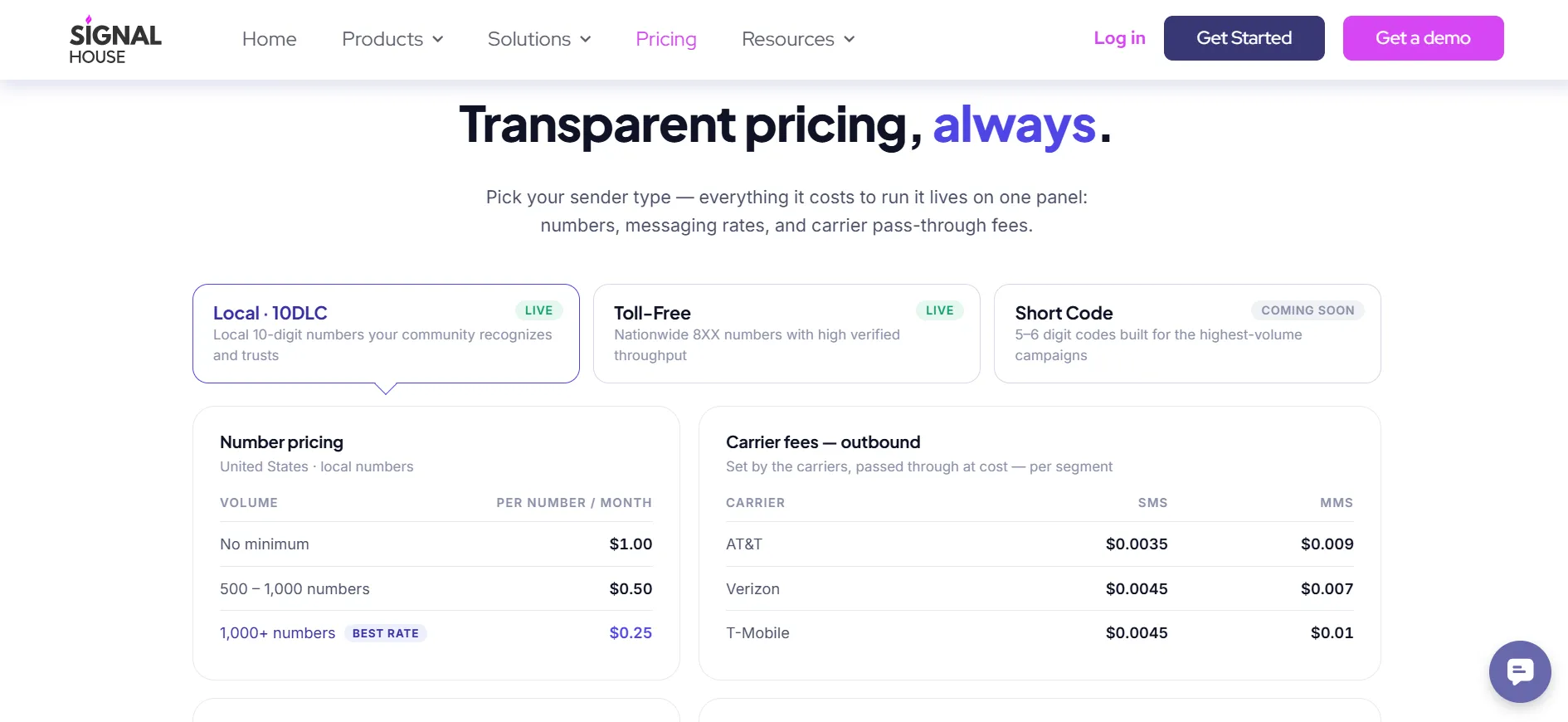
In common high-volume use cases, teams report running 70 to 90% cheaper than what they were paying on Twilio. There’s no separate paid tier you need to buy just to get decent support, which is where a lot of the hidden Twilio cost actually lives.
Routing: Messages route carrier-direct with smart queuing built in, so delivery holds up even as volume scales, instead of degrading the way it can on platforms optimized purely for API flexibility.
Setup: Campaigns are built through no-code tools, which means a marketer or an ops person can launch and adjust a campaign without waiting on a developer’s calendar. That alone removes one of the biggest bottlenecks teams hit on Twilio.
Support: White-glove support is included, not gated behind a premium plan. If something breaks at 9pm before a launch, you’re not stuck in a general queue hoping someone with context picks it up.
Who this is for: marketers, agencies, SaaS teams, and builders who want messaging to function like a reliable product, not a side project that occasionally needs an engineer to fix it.
Who it’s not for: teams that specifically want to build every layer of their communications stack from raw, low-level APIs. If that’s the goal, Twilio, Telnyx, or Bandwidth fit that need better.
For a deeper side-by-side, see the full Signal House vs Twilio comparison.
2. Telnyx: Best for teams that want low-level programmable control
Telnyx has built a solid reputation among developers who want to work close to the network layer itself.
It runs its own infrastructure and offers communications APIs and carrier connectivity aimed at teams that want to build rather than configure.
Strengths: Owns its network end to end, gives developers granular programmable control, and has tooling that technical teams generally like working with.
Trade-offs: Campaign workflows usually need to be built out manually, and A2P approval often takes several business days rather than the 48-hour turnaround Signal House offers on standard cases.
Best for teams with the engineering resources to build directly on telecom-grade infrastructure and who want that level of control badly enough to accept a slower setup process.
3. Bandwidth: Best for carrier-grade enterprise deployments
Bandwidth is a genuine telecom infrastructure company, not a layer sitting on top of someone else’s network.
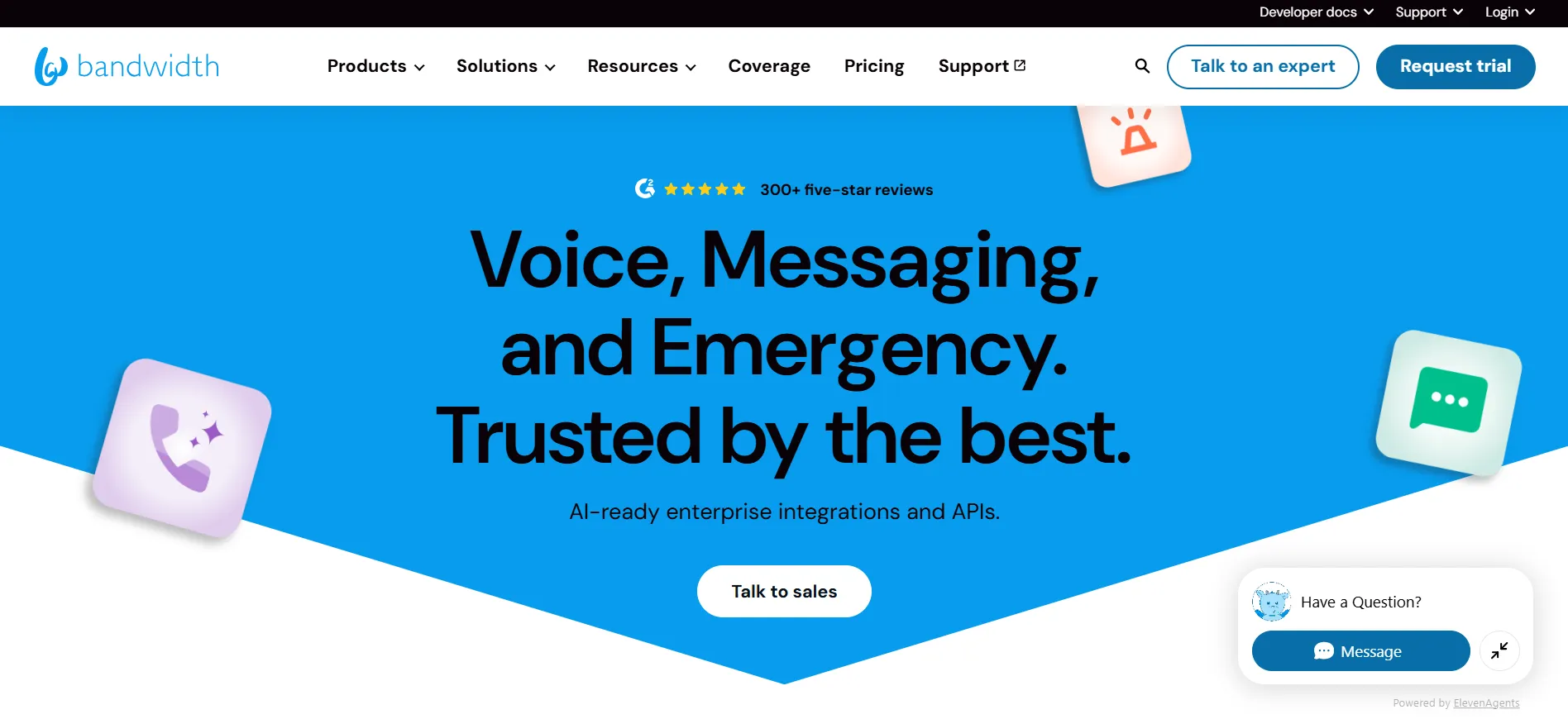
It runs its own carrier network and offers strong voice and messaging APIs built for large organizations with real engineering headcount and formal procurement processes.
Strengths: carrier-grade infrastructure that Bandwidth owns outright, enterprise-level reliability, and deep coverage across both voice and messaging.
Trade-offs: A2P review is manual and can stretch to several business days or more. The platform leans toward infrastructure rather than fast, self-serve campaign execution, and support runs through customer success plans rather than an instant chat window.
Best for large enterprises that have the engineering bandwidth and procurement processes to work with a carrier-grade platform, and that value owning the infrastructure relationship directly.
4. Sinch: Best for global, multi-channel programs
Sinch operates at real global scale, with a platform spanning SMS, MMS, WhatsApp, RCS, email, and voice.
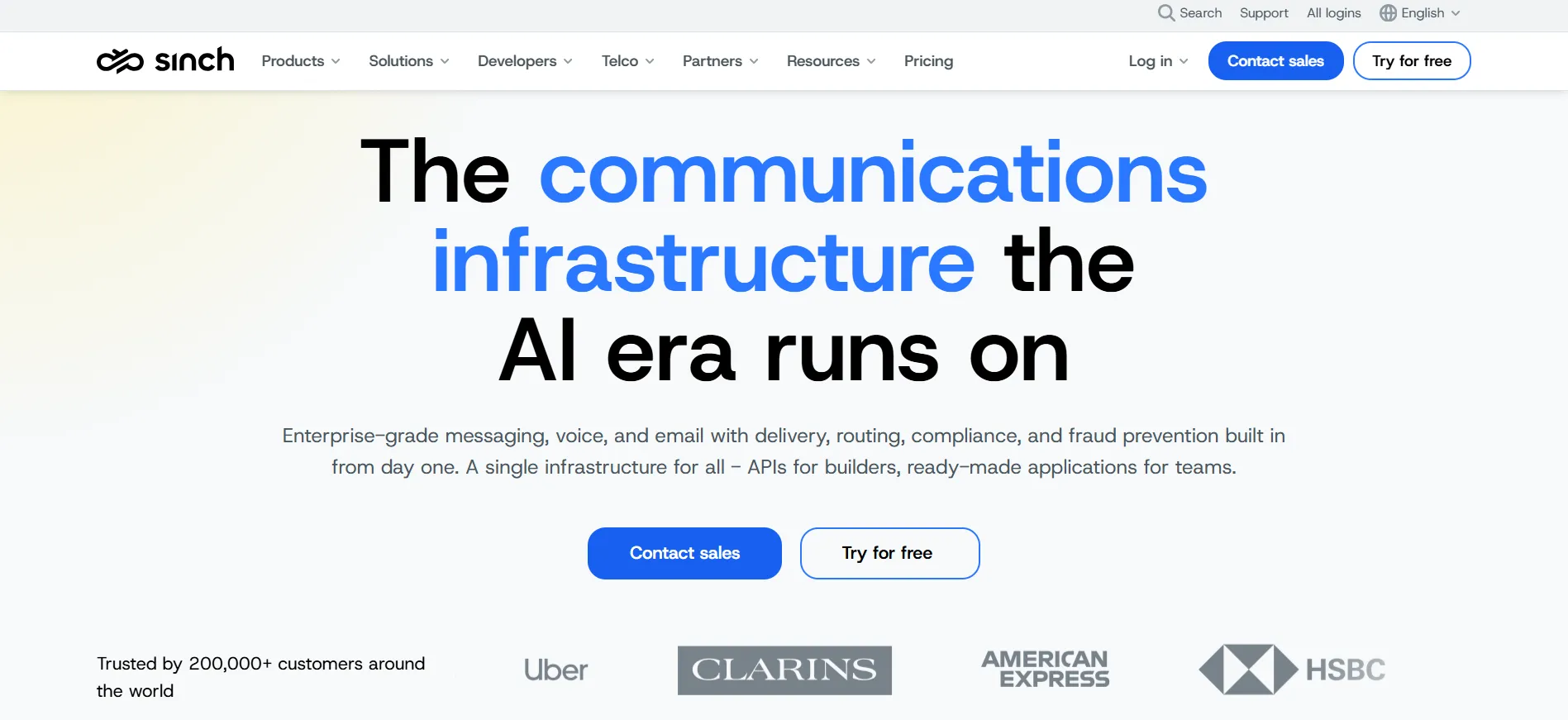
It’s built for enterprise customer engagement across many markets at once, not a single-channel SMS program in one country.
Strengths: genuine global reach, a large carrier network, and true multi-channel engagement rather than SMS with other channels bolted on as an afterthought.
Trade-offs: that breadth comes with real complexity. Standard setup often takes 7 to 10 business days, and the toolset takes more time to configure properly than a narrower platform would.
Best for global organizations running multi-channel programs across several markets, with the internal resources to manage that complexity rather than fight it.
5. Plivo: Best for cost-focused developers
Plivo made its name on programmable messaging and voice with pricing that undercuts the bigger incumbents.
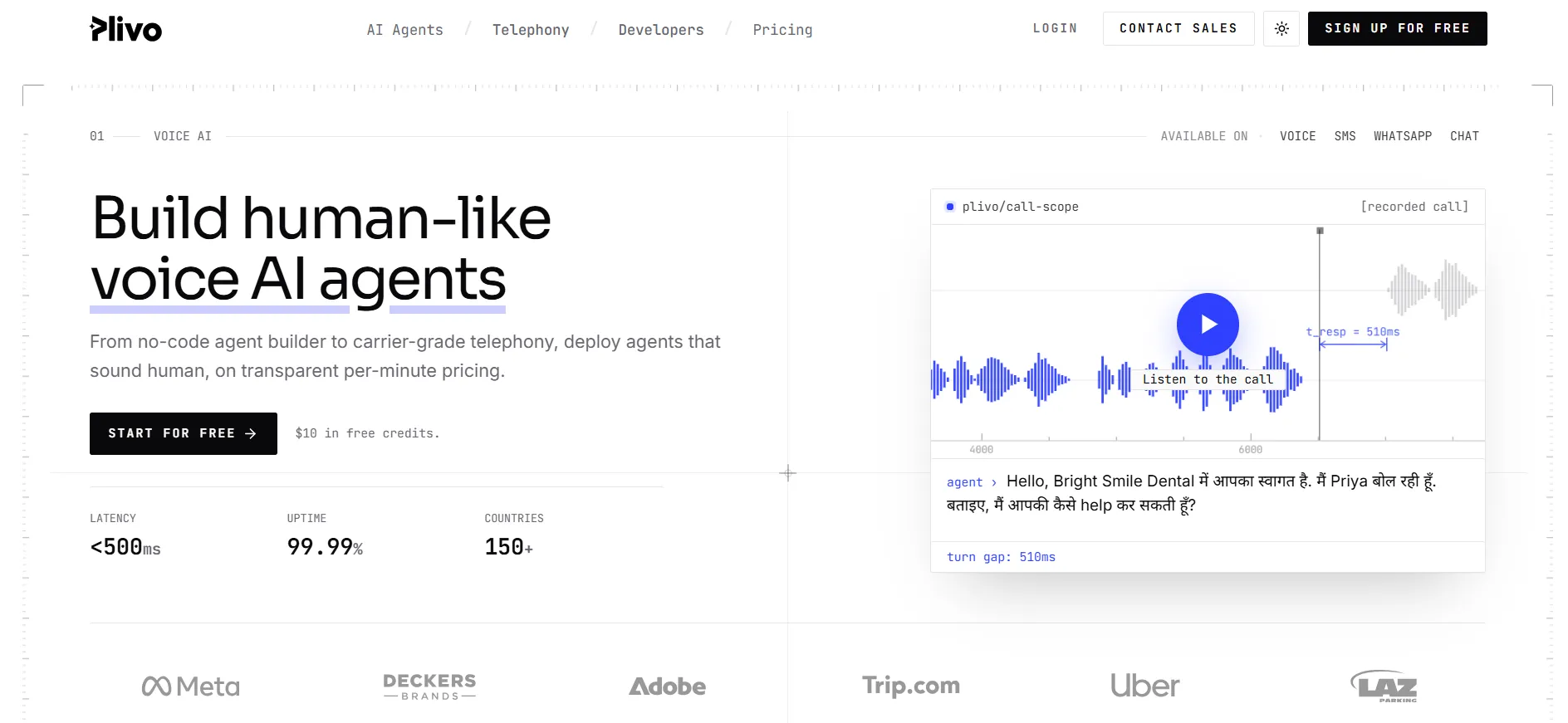
It’s a fit for teams that want direct API access to SMS without paying premium rates for the privilege.
Strengths: Genuinely cost-focused usage-based pricing, a straightforward programmable SMS API, and a developer experience that doesn’t feel bloated.
Trade-offs: Campaign execution leans API-first rather than no-code, routing quality can vary depending on the market and how the account is configured, and more of the messaging layer is left in your hands to manage rather than handled for you.
Best for developers who are comfortable owning more of the operational layer in exchange for a lower-cost SMS API.
6. Vonage: Best for a broad CPaaS ecosystem
Vonage offers a wide communications platform covering messaging, voice, video, verification, and broader engagement tools, backed by a long track record in business communications.
Strengths: A genuinely broad multi-product ecosystem, an established brand with a long history, and capability across many different types of communication under one roof.
Trade-offs: More configuration paths to navigate, a more technical route specifically to get A2P execution running well, and an experience that varies noticeably depending on which product and account tier you’re using.
Best for organizations that want one platform covering messaging, voice, video, and verification, and that don’t mind a more technical setup to get there.
Why so many teams are leaving Twilio
Twilio’s reputation isn’t undeserved. It’s powerful, it’s flexible, and it was one of the first platforms to make programmable communications a real product category. If you’re a developer-led company building a custom stack from scratch, that flexibility is genuinely valuable.
The problem shows up after launch, not before it. A2P 10DLC approvals stretch longer than teams expect. Pricing looks simple on the surface, then gets murkier as volume climbs and carrier fees stack on top.
Support is available, but the fast, hands-on kind tends to live behind a higher-tier plan. And because Twilio is built for engineers, even a small campaign tweak often means pulling a developer off something else to make it happen.
These frictions matter more now than they did a few years ago. Carriers have tightened A2P compliance across the board. Unregistered traffic gets filtered harder. Fees continue to eat into SMS margins.
In this environment, the platform you pick needs to help you move fast without quietly creating operational drag you only notice a month later.
This comparison focuses on the things that actually determine whether a switch is worth it: how fast you get approved, what you actually pay, how reliably messages route, how hard setup is, and whether support shows up when you need it.
Quick comparison table
Platform | Best for | Pricing model | A2P approval | Setup path | Support |
Signal House | Most teams sending A2P business SMS | Flat, transparent pricing; up to 80% lower than Twilio in common use cases | Around 48 hours for most standard cases | No-code campaign tools plus guided setup | White-glove support included at every tier |
Twilio | Developer-led teams building custom messaging workflows | Usage-based, plus carrier and platform fees | Several business days or longer, depending on the campaign | Developer-first | Basic support by default; faster support requires a higher tier |
Telnyx | Technical teams that want programmable telecom control | Usage-based, plus infrastructure costs | Several business days, depending on setup | Developer-led | Varies by plan complexity |
Bandwidth | Large enterprises needing carrier-grade infrastructure | Usage-based or enterprise contract | Manual review; often several business days or longer | API and infrastructure-oriented | Enterprise support paths only |
Sinch | Global, multi-channel engagement | Usage-based or enterprise contract | Often 7 to 10 business days, depending on campaign and market | Enterprise configuration | Scaled to the size of the deployment |
Plivo | Cost-focused developers | Usage-based | A few days, depending on campaign type | API-first | Varies by account |
Vonage | Broad CPaaS ecosystem needs | Usage-based, plus per-channel fees | Varies by campaign | Multiple configuration paths | Varies by product line |
Keep in mind that actual pricing, approval speed, and support quality shift depending on your campaign type, message volume, use case, and how your account is configured. Treat this table as a starting point for research, not a locked-in quote.
When staying on Twilio still makes sense
This isn’t a takedown of Twilio. It earned its market position, and there are real situations where switching away would be the wrong call.
You should probably stay put if:
You have an engineering team whose actual job is to build and maintain a custom communications stack, and that’s a good use of their time.
Your use case needs a wide API surface across many channels and edge cases that a narrower platform simply doesn’t cover.
You’re already deeply wired into Twilio’s ecosystem, and the cost of migrating is higher than what you’d save or gain by switching.
If none of that describes your situation, and what you actually want is faster launches, less day-to-day complexity, and support you can reach without an enterprise contract, the six platforms below deserve a closer look.
What switching from Twilio actually looks like
The biggest reason teams stay on a platform they’ve already outgrown is fear of the migration itself. Downtime, number porting, rebuilding every campaign from scratch, A2P registration delays, it’s a long list of things that can go wrong, at least in theory.
In practice, the migration is usually far more manageable than teams expect. Here’s what a realistic switch looks like:
Account and A2P setup. Brand and campaign registration start first. On Signal House, most standard use cases clear A2P approval in around 48 hours, which sets the pace for everything that follows.
Number porting. Existing numbers can be ported over while your current setup stays live, so there’s no gap in delivery while the port processes.
Campaign rebuild. Built-in templates and campaign tools replace whatever custom workflow you had running on Twilio, and teams often find this step faster than they braced for.
Parallel run and cutover. Both systems run side by side briefly, you confirm delivery and reporting line up, then you cut over fully.
The real goal of a migration isn’t just moving phone numbers from one dashboard to another. It’s moving to an operating model where your team can manage messaging directly, without routing every small campaign change through an engineer’s backlog.
FAQs: Best Twilio Alternatives in 2026
Yes. Several platforms on this list can run more cost-efficiently than Twilio depending on your use case. Signal House specifically can cost up to 80% less in common use cases, with flat pricing and support included rather than sold separately. Your actual savings will depend on volume, routing needs, and how much support your team relies on.
For most teams that want a fast launch, less operational overhead, no-code campaign tools, and support that actually responds, Signal House is the strongest overall pick.
Usually easier than teams assume going in. A2P setup can start immediately, number porting runs in parallel with your existing service, and campaigns get rebuilt using ready-made templates instead of custom code. Many teams complete the move within days, depending on how complex their existing setup is.
Yes, in almost all cases. The safest approach is to keep your current Twilio setup active while the port is in progress, then switch over fully once the new setup is confirmed working.
In common use cases, yes, by as much as 80%. Part of that gap comes from Signal House including hands-on support by default, rather than charging extra for the level of support most teams actually need.
Teams that specifically want to build every part of their communications stack from raw, low-level APIs will likely find Twilio, Telnyx, or Bandwidth a better match for that goal. Signal House is built to remove that work, not to replace it with a different flavor of the same complexity.
Quick Links:
Comments
Be the first to leave a comment.