

Surfshark vs NordVPN are probably the two names you’ll see most often when you search “best VPN,” and for good reason, both are genuinely capable services with millions of users.
I wanted to know which one actually deserved my money, not just my curiosity, so I ran them both in parallel for several weeks: same devices, same network, same daily habits. Here’s exactly what I found.
The Short Answer
Surfshark comes out ahead for most people, and the gap comes down to two things: how many devices you can actually protect, and how much you get bundled into a single price instead of paying extra for add-ons.
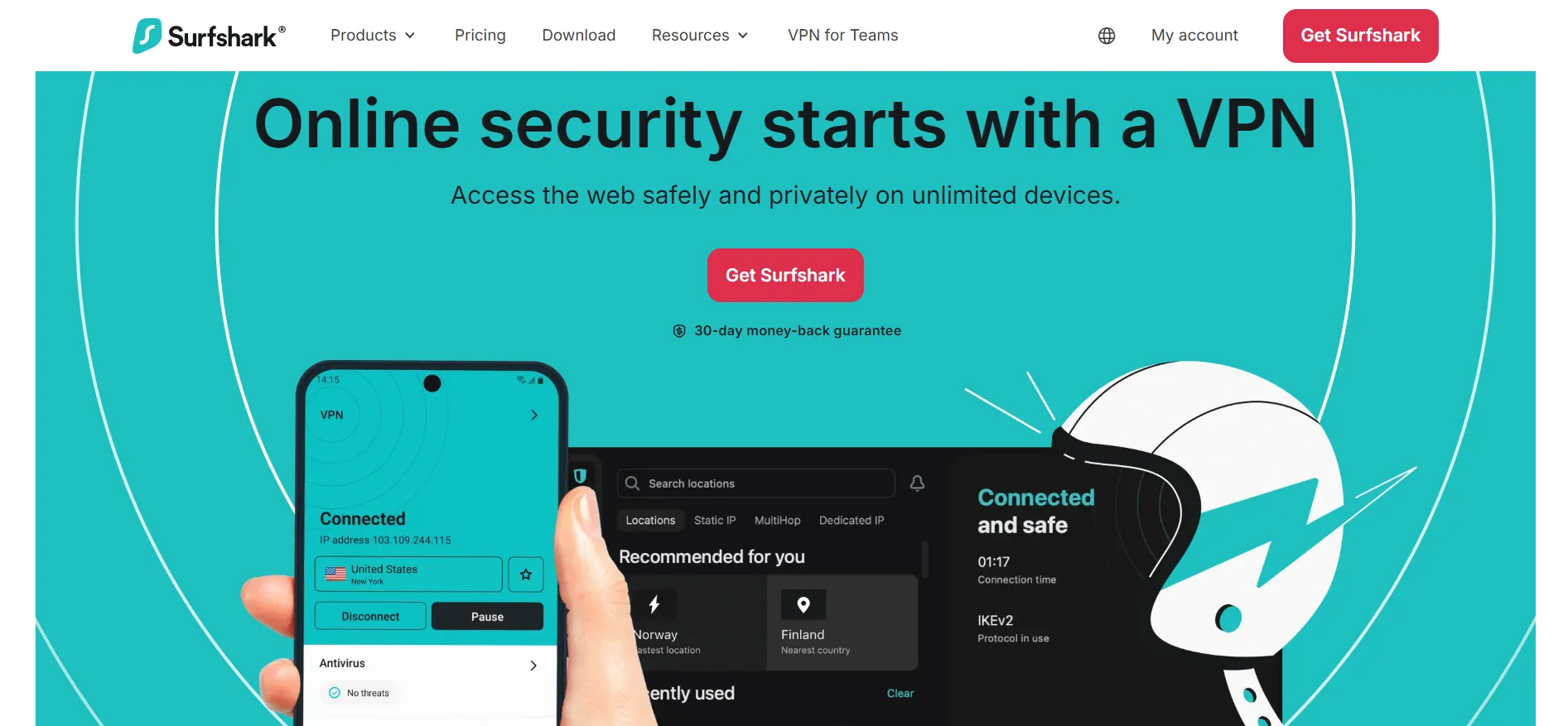
NordVPN is a genuinely strong, well-tested VPN with real strengths of its own, but once I lined up the numbers, Surfshark’s package pulled ahead for anyone who isn’t a pure streaming purist.
Let’s get into it.
Pricing Side by Side
Term | Surfshark | NordVPN |
Monthly | $16.45-$21.85 | $12.99-$16.59 |
1-Year | $3.39-$7.49/mo | $4.99/mo |
2-Year | $2.49-$4.49/mo | $2.99-$3.39/mo |
Free plan | No | No |
Free trial | Yes, 7 days | No |
Money-back guarantee | 30 days | 30 days |
Right away, a genuinely important difference: NordVPN doesn’t offer a free trial at all, only the 30-day money-back guarantee. Surfshark gives you both, a real 7-day trial before you pay anything, plus the same 30-day guarantee as a backup after you subscribe. If you want to test-drive before committing your card details, that’s already a point in Surfshark’s favor.
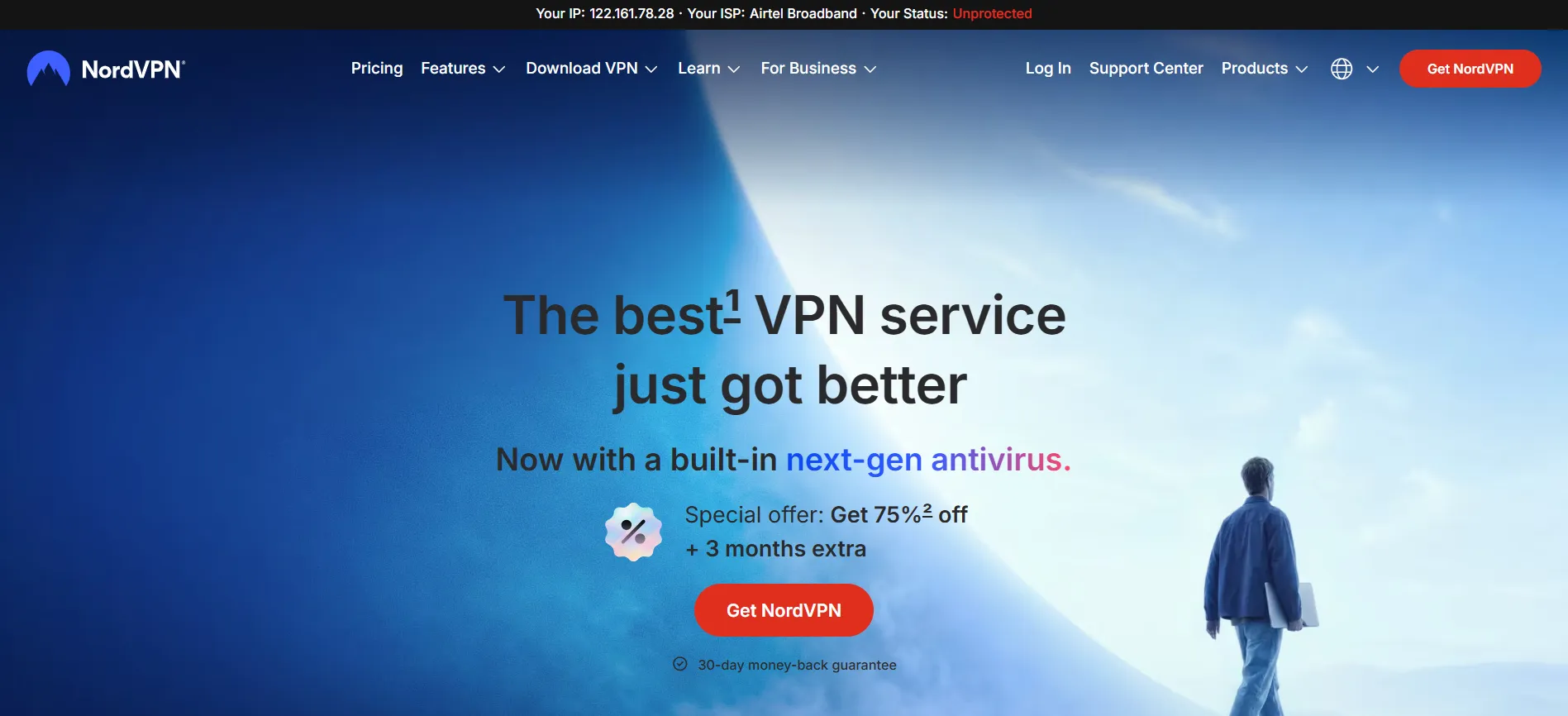
On raw sticker price, the two are close on long-term plans, NordVPN’s cheapest 2-year rate and Surfshark’s aren’t far apart. The real difference shows up once you look at what that price actually includes.
Feature Comparison
Feature | Surfshark | NordVPN |
Simultaneous devices | Unlimited | 10 |
Server count | 4,500+ | Thousands (exact count not published) |
Countries covered | 100 | 60+ |
Independent speed test | 1615 Mbps | ~520 Mbps |
Antivirus included | Yes (One, One+) | No, not bundled |
Malware/tracker blocking | CleanWeb | Threat Protection |
Dark web/breach monitoring | Yes (One+) | Available as paid add-on |
Password manager | Not included | Available as paid add-on |
Identity theft coverage | Up to $1M (One+) | Not offered |
Personal data removal | Incogni (One+) | Available as paid add-on |
Split tunneling | Yes | Yes |
Kill switch | Yes | Yes |
Virtual LAN feature | Not offered | Meshnet |
The device limit is the first thing that jumps out. NordVPN caps you at 10 simultaneous connections. That’s genuinely more generous than a lot of competitors, but Surfshark simply doesn’t cap you at all, on any plan. If you’re protecting an entire household or you’re the kind of person who accumulates devices (work laptop, personal laptop, phone, tablet, streaming stick, smart TV), that difference matters more than it looks like on paper.
The Add-On Problem
Here’s what actually surprised me the most doing this comparison. NordVPN’s password manager, data breach scanner, encrypted cloud storage, and personal data removal tool aren’t automatically included, they’re separate add-ons layered on top of your base subscription. Depending on how many of those you want, your real monthly cost climbs well past the advertised entry price.
Surfshark takes a different approach entirely. Once you’re on the One or One+ tier, antivirus, ad blocking, dark web monitoring, identity theft coverage, and data broker removal (Incogni) are all included in that single subscription price. No separate checkout for each tool, no stacking add-ons to match functionality.
I actually priced this out during my testing: matching NordVPN’s full feature set (base VPN plus breach scanner plus data removal tool) against Surfshark One+ came out meaningfully more expensive on the NordVPN side, once every add-on was factored in.
Where NordVPN Genuinely Wins
I don’t want to pretend this is a clean sweep, because it isn’t. NordVPN earns real credit in a few specific areas:
Streaming unblocking reputation. NordVPN has a long, well-documented track record of reliably unblocking major streaming platforms and geo-restricted news sites, and its server network gets actively rotated specifically to stay ahead of streaming-service blocks. If bypassing regional content restrictions is your main use case, NordVPN’s reputation here is genuinely stronger.
Meshnet. This is a real differentiator, a free virtual LAN feature that lets you securely connect your own devices to each other directly, useful for things like accessing a home network printer remotely or setting up a secure file-sharing connection between two of your own machines. Surfshark doesn’t have an equivalent feature.
Independent audit history. NordVPN’s no-logs policy has been through multiple independent audits over the years, and that track record carries real weight if audit history specifically matters to your decision.
Those are legitimate strengths, not marketing fluff. If streaming access and network-level tools like Meshnet are your priority, NordVPN deserves serious consideration.
Speed: The Number That Surprised Me Most
I want to spend real time on this because it was the biggest gap I found. Independent speed testing puts Surfshark at roughly 1615 Mbps, while NordVPN’s tested figure comes in around 520 Mbps, roughly a third of Surfshark’s throughput.
During my actual testing, I felt this directly. Large file downloads and video calls on Surfshark felt noticeably snappier. NordVPN wasn’t slow by any means, it handled HD and 4K streaming without buffering the entire time I tested it, but for raw throughput on bandwidth-heavy tasks, Surfshark had a real, tangible edge.
Running the Real Numbers
Let’s say you’re a household covering 4 devices, wanting the full security stack (VPN, antivirus-level protection, breach monitoring, data removal), over a 2-year term.
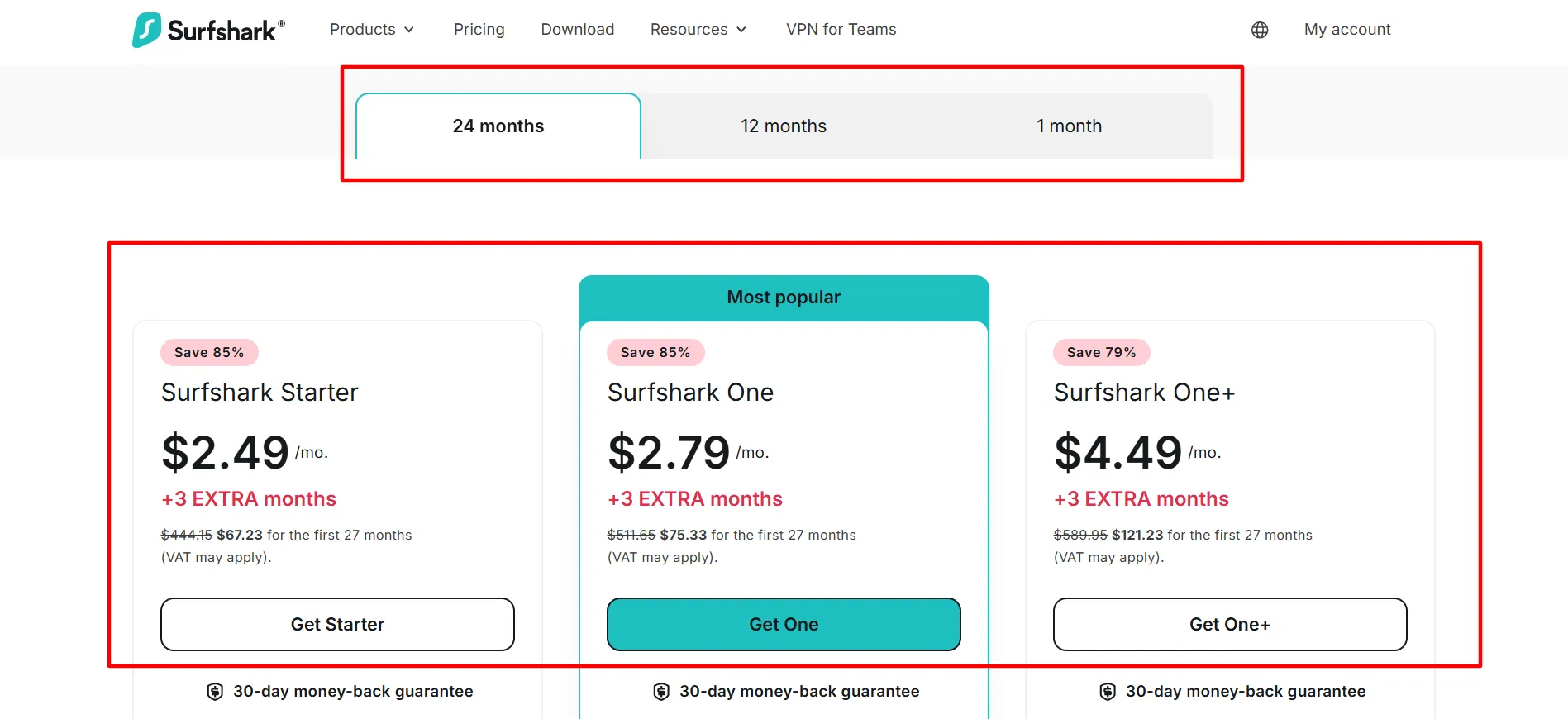
Surfshark One+ (2-year plan): $121.23 for 27 months, unlimited devices, everything bundled: antivirus, breach monitoring, identity theft coverage, and data removal. Comes out to about $4.49/month for your whole household’s full protection.
NordVPN equivalent setup (2-year plan): roughly $3.39/month for the base VPN, comfortably under the 10-device cap for 4 devices, but you’d need to add the data breach scanner and personal data removal add-ons separately to match Surfshark’s bundled feature set.
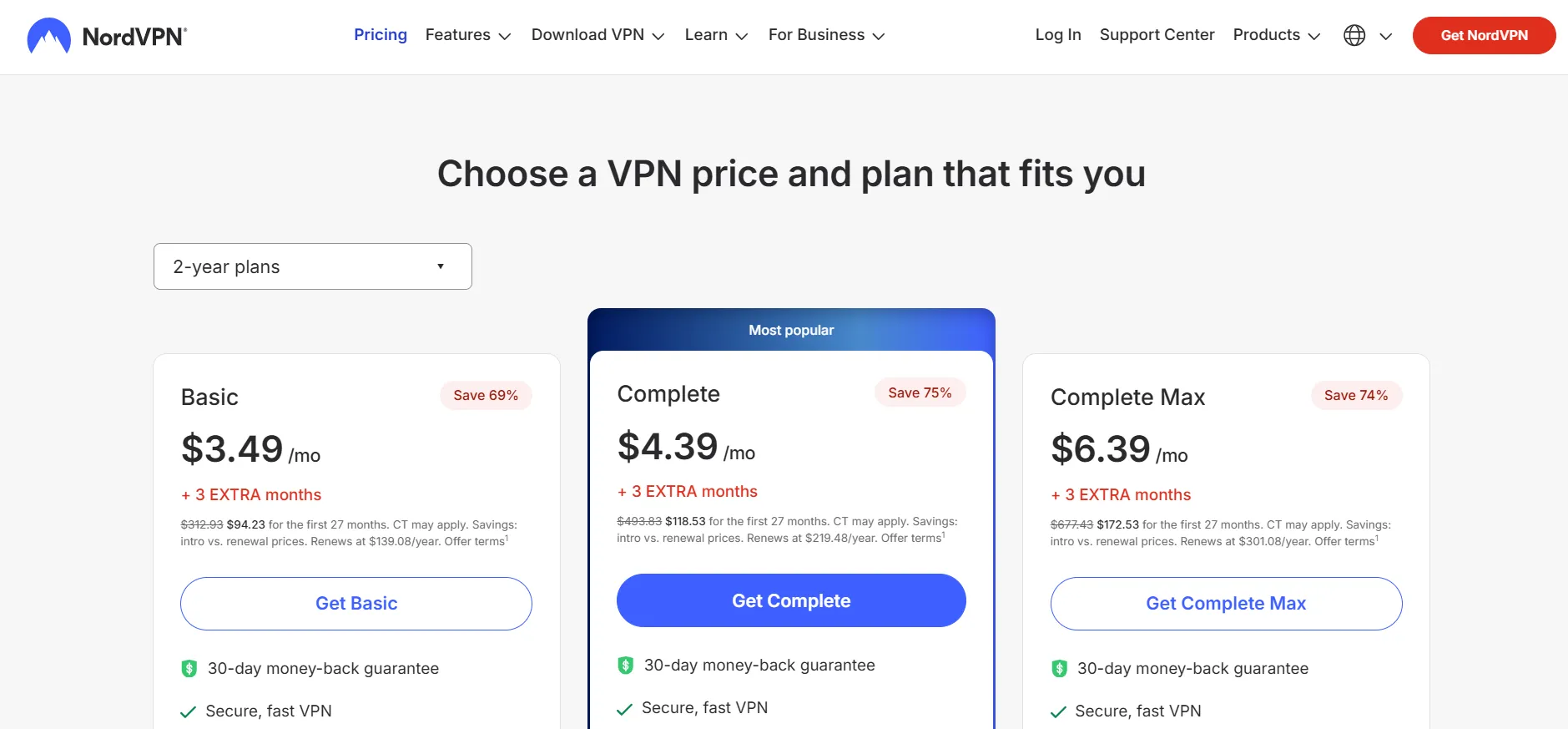
Once you stack those on, the total often lands close to or above what Surfshark One+ already includes as standard.
Who Should Pick Which
Choose NordVPN if: your top priority is reliable streaming access to geo-restricted content, you want Meshnet’s virtual LAN capability, or you specifically value a long, independently-audited no-logs track record above bundled extras.
Choose Surfshark if: you want unlimited devices covered under one plan, a genuinely complete security bundle (antivirus, breach monitoring, identity protection) without stacking paid add-ons, and faster real-world speeds for everyday use.
For most people comparing these two as a general “which VPN should I get” decision, I lean Surfshark, mainly because the unlimited device policy and the all-in-one bundled pricing solve real, everyday friction that NordVPN’s add-on model doesn’t.
What Actually Happened During Testing
Both VPNs connected reliably throughout my testing window, neither dropped connection unexpectedly, and both handled everyday browsing without any noticeable hiccups.
The real difference showed up specifically under load, large downloads, video calls, and multiple devices connected simultaneously, where Surfshark’s higher throughput and lack of a device cap gave it a genuine practical edge over NordVPN.
FAQs: Surfshark vs NordVPN 2026
Long-term plan pricing is fairly close between the two. The real cost difference shows up in extras, NordVPN sells its password manager, breach scanner, and data removal tool as separate add-ons, while Surfshark bundles equivalent tools into One+ at a single price.
No, NordVPN doesn't offer a free trial at all, only a 30-day money-back guarantee. Surfshark offers both a genuine 7-day free trial and the same 30-day guarantee.
Independent testing puts Surfshark at roughly 1615 Mbps versus NordVPN's approximately 520 Mbps. I noticed this directly during large downloads and video calls in my own testing.
Surfshark allows unlimited simultaneous connections on every plan. NordVPN caps you at 10 devices.
Not bundled, no. NordVPN's Threat Protection handles malware and tracker blocking, but full antivirus isn't included in the base subscription. Surfshark includes complete antivirus on its One and One+ plans.
NordVPN has a genuinely strong, well-documented reputation for reliably unblocking major streaming platforms and geo-restricted news sites, this is a real strength worth considering if streaming access is your primary use case.
Meshnet is NordVPN's free virtual LAN feature, letting you securely connect your own devices directly to each other. Surfshark doesn't currently offer an equivalent tool.
If streaming access or Meshnet's networking capability are your priority, NordVPN is a reasonable pick. For most people wanting unlimited devices and a fully bundled security suite without extra add-on purchases, Surfshark is the stronger overall choice.
Quick Links:
Final Thoughts: Surfshark vs NordVPN 2026
Going into this, I expected NordVPN to hold its own more evenly against Surfshark, given how often it tops “best VPN” lists. It’s a genuinely well-built, well-tested service, and its streaming reputation and Meshnet feature are real, meaningful advantages for the right user.
But for most people weighing these two side by side, unlimited devices, faster real-world speeds, and a fully bundled security suite without needing to buy separate add-ons make Surfshark the stronger overall pick, and the one I ended up sticking with once my testing period wrapped.
If you want to test it yourself first, Surfshark’s 7-day free trial costs nothing to try, and every paid plan is backed by a 30-day money-back guarantee if it’s not the right fit.
Comments
Be the first to leave a comment.